Showing posts with label Opinion. Show all posts

Monday, May 7, 2012

From WAA to DAA - what's in a name change?

This is a guest post from Joseph Carrabis, a mentor and friend who occasionally provides an unbiased independent and always very interesting view of the web digital analytics industry. One of his previous posts, "the unfulfilled promise of online analytics", written over two years ago, is still very relevant to this date - you might want to start there and come back. At the time, his views sparked a truckload of comments and I nodded Joseph in a previous post.

You Say Tomato, I say "Irrefutably demonstrate that you are different than what I recognize as a 'ToMAHto' and I'll call you a 'ToMAYto'".

Dan Linton Interviews NextStage CRO Joseph Carrabis on the Web Analytics Association-Digital Analytics Association rebranding.

(My thanks to Stéphane Hamel for his editorial guidance and to Dan Linton for helping to continue the myth that I'm intelligent. All opinions expressed are mine. This post is dedicated to Charles, NextStage's CTO, who periodically tells me "You're such an academic.")

In March 2012, the Web Analytics Association changed its name to Digital Analytics Association. In this article, Dan Linton interviews NextStage CRO Joseph Carrabis regarding that name change, what it means and whether it is likely to affect the Association's present and future.

Q1: How significant is this name change to you?

While I appreciate the question "How significant is the name change to you?", I'm not the audience that needs to answer it. To me, personally? Not much. I recognize that the world is changing and that rebranding is a simple strategy for claiming relevancy in a changing world, but rebranding purely to demonstrate relevancy without adaptation to the environmental changes (and this goes beyond indicating "we do mobiles, too!") is change without remissioning ("re-mission", as in "change of course", "recognition of new goals, new meanings, new purpose, ...") and is a futile endeavor.

Aboriginal societies rename (rebrand) individuals to designate status changes within that society and often the individuals will rebrand themselves based on life changes.

Whether aboriginal or modern society, rebranding only occurs when status changes. An individual or organization with a very strong brand (name identity) won't rebrand unless there's environmental (market) pressure to survive. That's evolution and any evolution is an indication the original organism is ill suited to the new environment.

Thus the greater question is "How deep does the rebranding go?"

Q2: Is "Digital" so different from "Web" really?

About five years ago, maybe. Between 2005-2007 the meanings were different and significantly so. Now, not so much so. If a recognizable difference exists it's probably a holdover from the first ten years of this 21stcentury and even then, only in the minds of luddites like myself - the "web" is what you get on your desktop's browser. "Digital" is what you hold in your hand. I mean, that's what "digital" relates to; your digits are your fingers, hence what you hold in your hand. This hearkens back to my statements early in 2007 that the history of technology is the placing of the most power in the most people's hands economically.

But the distinction I make in the above is one of device and by extension presentation because the presentation will be constrained by the device n which the information is presented. Device constraints are obviously a major consideration and the demonstration of this is the big selling points on successive generations of mobile devices - screen resolution, color density, speed and connectivity for example.

Those distinctions are the same ones that were touted ten years ago, twenty years ago and so on.

Now if the question is "Do people within the industry recognize a distinction between "web" and "digital"? then we're asking a completely different question and this leads to your next point.

Q3: Insiders mostly think "web site analytics" is far different from "mobile/web/app/social analytics" but from an outsider's perspective, do those two words really mean something different?

Note that Justin Cutroni wrote Radically Rethinking Web Analytics and it's an interesting read that answers the question from a branding perspective, not a use perspective (a la Defining "Definition" and People as "Programmable Entities" ). Identifying an activity (specifically, identifying one's self with an activity) is not the same as demonstrating the outcomes of an activity (specifically, demonstrating that one's activity produces specific outcomes). There are lots of people who can see a rocket launch and identify it as "rocket science" and the number of people who can get a rocket to launch is much smaller.

This difference between seeing and doing could be the divide Justin mentions re web vs digital analysts. But then membership numbers become confusing. Daniel Waisberg shared that the official WAA-DAA enrollment is "over 2,000". LinkedIn reports 11.5k or so members in the DAA Group. These numbers are after an eight year WAA-DAA history. Place those numbers against the number Justin offers for Google Analytics accounts (even counting inactives, multiple accounts, et cetera as was explained to me by ClickInsight's June Li ) and a social disparity appears - the active population is too small to sustain itself in anything but a highly networked world. The collapse of geographic boundaries is the only reason this "analytics diaspora" could maintain itself, and even then several other socio-cultural factors had to exist (many of them reported in the Unfulfilled Promise series).

But now another problem appears and it is demonstrated in Justin's post and the recent WAA-DAA rebranding: small cultures don't survive population fragmenting. Everybody knows about the great cultures of history, few know about the once thriving but too small to be sustained cultures of the Andean Blue Men, the GoatMen of Aguirra, the People of the Elk, ... Our only knowledge of them is from the scant oral and few written accounts of the Marco Polos who encountered them in their travels.
So while renaming et al is a fascinating exercise, the real goal should be population based (recruitment, unification, defragmentation, ...). The DAA should capitalize on its WAA roots as much as possible (as indicated in Justin's post) rather than completely rebrand. The situation reminds me of the chicken-or-the-egg question that exasperates semioticists; "What came first, the chicken or the egg?" is an illogical question. /Until someone pointed at some thing and said "That's a chicken." then there were no chickens to lay eggs that would hatch chickens, hence the chicken had to come first. The DAA was hatched from the WAA. It's first port of call should be all those web analysts Justin writes about.
Now, to answer Dan Linton's question...

The answer is within the question and the demarcation is between "insider" and "outsider", not between "web" and "digital".

I contacted forty individuals worldwide via email, Skype and phone; people whom I knew were in the online analytics field and who were involved in the WAA in some capacity or other (about half took part in The Unfulfilled Promise of Online Analytics study). The other unifying element of my sample was that their peers provided consistent evaluations of them as people (note that. I was evaluating by social status, not analytic ability). More specifically, I was separating "loyalty to the dollar" and "loyalty to the truth". "Dollar" is objective and binary, "truth" is subjective and analog.

One of the simplest ways to translate subjective, analog data into objective, binary data is via The Chinese General Solicitation : Does person A think person B is more apt to follow the dollar or follow the truth? People B who scored over 90% "truth" were those I interviewed.

Thus to the point of whether "digital" is so different from "web" and according to a fairly diverse group (whose only commonality was that their peers thought them a) truthful, honest people b) whose opinions weren't influenced by who was paying them), no, not really. The great rush, it seemed, was to catch up to where the industry was already going. All but a few people interviewed said that the industry was already "digital" and the majority of people were already doing "digital" so the name change was merely cosmetic.

It was at this point that those interviewed provided an internal demarcation regarding "insiders".

A few offered that the name change would allow for a rebranding of tools and trainings, requiring recertifications perhaps, but not because the tools were actually doing anything differently. They may be monitoring mobiles instead of websites but that was only a difference in access, not intention.

With this piece of information one can wonder who the insiders really are because the people actively doing the analytics have been adapting to the changing analytics ecology for a while. Thus if the name change represents nothing more than a new marketing opportunity, expect little real change - remissioning - to occur. You teach a WA course, correct? Has there been any discussion of teaching DA courses? And if so, is there any functional, operational change in what's being taught? How it's being taught? What actionability comes from the results?

The answers to these questions answer your Q3 question.

Dan Linton Responds: To my knowledge, those changes will come eventually but UBC like many academic institutions is a bit slow when it comes to the change approval process. The reality is though that the content already is inclusive of "digital" so I don't foresee any major changes.
The courses are mostly online reading with discussion forums and a few assignments which the tutors (like myself) mark and offer advice upon. The courses are more about "how to think about analytics" as opposed to any kind of technical training. I've always thought they needed to supplement them with far more tactical things like how to properly set up a dashboard in Excel, which is pretty basic but shocking how few people know how to do it.

Q4: Does the word "digital" reflect any piece of data stored on a digital medium (which is virtually every piece of data in the world now)?

Hmm...Within this context? Hmm... The question as phrased is fascinating. It indicates two-dimensional thinking. "Stored" relates to two things interacting with each other and can only be measured as an indication of existence. Something either exists in a given medium ("is stored") or not. There is no information regarding that thing's value, purpose, intention, function, et cetera. All we know is that that thing is interacting with the space bounded by the medium and that the interaction is "exists within". Ultimately these kinds of measurements are binary because all we can do is determine "Yes, it exists" or "No, it does not exist". If 50,000 people live in a city we've only summed 50,000 pieces of "Yes, it exists". We have no knowledge of what they're doing in that city. And if the only data we can collect is binary in nature, we need an enormous amount of binary sets to extract even the simplest information and make decisions.

Another fascinating element of the question is the use of the word "data", not "knowledge", "information" or "wisdom". Data is neutral in nature. Data in context is information. Knowledge provides structure to information, hence direction. Wisdom helps us decide if we want to go in that direction (actionability) or develop another structure, a new framework for that knowledge (applicability).

(image fromhttp://www.nathan.com/thoughts/unified/3.html)

Of course, wisdom doesn't come until you've screwed up lots of data, but there you go.
So if the basic form of the data is a series of existences, then yes, "digital" does reflect any piece of data stored on a digital medium. Should the WAA/DAA ever have to deal with social probabilities (where logical calculus rules) and neuromathematics, be prepared for big changes because "exists" is no longer the basis of the measurement. I use to get drink after drink after drink in bars because I could flip a coin and continually call the outcome (I discuss how to do this in Reading Virtual Minds V2: Theory and Application, by the way). Eventually I discovered I could make money by teaching others how to do it. What I was really teaching was a specific application of social probability theory.

But now we're discussing social, and most people doing social analytics are still taking binary measurements, so again, rebranding without remissioning. No new knowledge or wisdom, only new labels and titles.

Q5: Do you feel that the name change is simply cosmetic to refresh the WAA brand?

Dan, thank you for this lovely can of worms. How nice of you to hand it to me. The question is "Is this a renaming rebranding or a remissioning rebranding?" and in either case, change is always worth investigating. Change is adaptation is evolution.

This rebranding came to my attention when I received an invitation to a meeting. Normally invitations to any meetings quickly go into my trash bin. I hadn't received an invitation from this source in some time and my first thought was "They must be trolling their old email lists." Then I noticed the invitation had been rebranded.

Sort of.

All meetings that had once been WAA branded were now DAA branded. I'd also been told by a few people that what once were WAWs were now going to be DATs. The social-anthropologist in me kicked in. A fundamental concept in neuro- and psycho-linguistics is "If what you're doing isn't working change anything" and here in my Inbox was evidence that there had been change - a psychological and temporal distancing. The renaming was one thing, the changing dates (by some, I learned, not all) was real evidence of the latter's desire to separate from the former.

However, as often happens, exteriors had changed and not much else. The same people, the same purpose, the same goals, the same activities. The emperor had changed his clothes but still ruled the same way.

Was this some kind of splintering? Doubtful, considering the source. Was this a recognition of a fundamental flaw in the organizational logic? Ditto.

But my background is one of perpetual testing. I rarely take statements as valid regardless of source until I've tested them myself. What was this rebranding all about? That's what led me to conduct the survey I mentioned earlier in Q1c.

Organizational change has been necessary for a while. Several years back and at more than one con I openly stated thatthe WAA showed all the traits of a society in decline . Some people asked me what could be done to change that and I offered some suggestions based on historical precedents. Without going into agonizing detail, probably the best known historical precedent of a society in decline that successfully remissioned itself so that the society both survived and thrived is the United States before and after the US Civil War.

Much violence, much death, much destruction and in the end the one thing that linguists and social historians point to is that the change was conceptual; prior to the Civil War it was "THESE United States" and after it was "THE United States". The country went from a collection of individual entities who thought of themselves as "individual entities who were part of a group" to a single entity that was "the group". There's an old Greek proverb that fits this well, me thinks, "A civilization flourishes when people plant trees under whose shade they will never sit."

The WAA as I knew it and the pre Civil War US were suffering the same problem - lots of individuals who wanted to be recognized as individual parts of a group. The evidence of this was that people self-identified based on job title and company during casual conversation at conferences, nobody self-identified as some function or relation within or to the WAA. There is no organization until people are willing to self-identify with that organization. Likewise, how people self-identify demonstrates what they value. There were and probably still are a few people planting trees and I don't know if there's enough of them to insure future shade.

But as noted earlier, if the change produces only new names and titles then the emperor is changing clothes, not restructuring his kingdom and shade will neither exist nor long survive. The proliferation of conferences (many of them causing increased splintering rather than unifying), the changing of allegiances and alliances, the once friendly leaders now threatening to sue each other - it's almost as good as Tudor England! Everybody in Henry's court worked very hard to 1) get their way, 2) increase their own little empires and 3) keep their enemies at bay. Keeping the kingdom intact was everybody's stated purpose but only after 1, 2 and 3 were met.

Q6: ...or does it signify significant changes in the organization and the people involved?

There is another rule in neuro- and psycho-linguistics: Nothing changes until it absolutely has to.

Businesses won't bring about any change until they absolutely have to. From social and economic historians we also know that while a business may be a market leader it will not long lead the market because businesses have a remarkably poor ability to recognize internal threats. External threats are dealt with by protecting one's territory and as long as one is protecting, the only evolution that takes place is responsive, not adaptive, and responsive change results in evolutionary dead ends - the organism evolves to respond to a given threat perfectly but when the environment in which these two organisms thrive changes, they can't. They're designed for each other, not the environment, and can not survive in the changed environment. We're currently seeing this in the move to ebooks, except we're learning that ebooks are great for leisure reading and not for research/study reading (students using ebooks don't retain information as long or internalize it as rapidly as those using printed texts). People were planning on a new environment and it turns out that new environment is limited. Oops!

Organizations can bring on change but the only change they'll bring about is that which best serves their community. This is social and cultural anthropology writ large; determine which community best benefits from an organization's change and you learn who that organization serves. In the vernacular, Follow the Money.

I haven't noticed the fracturing of the online analytics community documented in theThe Unfulfilled Promise of Online Analytics trilogy decreasing (based on conversations I've had with those in it daily), and the fact that respondents to my Q3 survey differentiated "outsiders" from "insiders" from "Insiders" speaks volumes, me thinks, and is the final demonstrable answer to your question.

Q7: With this change in mind, do you see the DAA as leading, following, struggling to keep up, or slapping paint on a condemned building?

I recognize two issues at work here.

1) A few years back I was talking with someone very high up in the online analytics community and suggested they use the oncoming directional shift as an opportunity to take the lead. Their response was an emphatic "No!" They would loudly declare where the market is going but only after seeing where it went. This is a safe position but not a tenable one.

People who've taken NextStage trainings know about Towards and AwayFrom. Leading from the rear is an AwayFrom strategy and AwayFrom makes organization, effective communications, strategy making and planning, et cetera, extremely difficult. There are lots of ways to get "away from" a problem state and the (vast) majority of them do not get you any closer to a solution. Lots of money may be spent, lots of activity may occur and in the net result is zero. Success is declared by corporate - or organizational - decree, not by externally recognizable change.

What's exponentially worse is that there's only one way to minimize time and effort if you're an AwayFrom kind of person; go Towards the solution. Such solutions and Towards thinkers are easy to spot. They start where they are and step one step at a time until they've reached the solution. Towards thinkers keep their eyes on their desired outcomes and get there faster, more directly and with minimal expense in the long term.

Leading from the rear is a fascinating strategy and people who lead from the rear can not claim thought leadership. The two are incongruous. But now we're asking, "Is one function of the WAA/DAA is to offer thought leadership?"

In any case, the determination is one of following, not leading.

Next determine if the WAA/DAA is offering organization, effective communications, strategy making and planning, et cetera and providing them from the front or the rear? Is the WAA/DAA
  • Seeing where things are going then pushing their way to the center every time the migration ceases and declaring "This is where we're suppose to be"
  • Out in front and shouting "Everybody stay back until we find out if it's safe"
  • Fearful there's a cliff up ahead, counting the number of heads still on the plateau at the end of each day and deciding whether or not to declare there's a cliff without further investigation as to why there are fewer and fewer heads on the plateau at the end of each day
The United States government is going through the same thing right now. The time it's taking the Republican party to put forth a recognized candidate is indicative of this.

In any case, this determines whether there's any struggling and how much is involved.

2) One well recognized leader in the WAA told me that he's not a numbers person, rarely looks at site numbers and never pays attention to them. Yet this individual wanted help with their site. Another well recognized analyst told me that they don't use any analytics on their own site. How come? "It's not going to tell me anything useful."

These statements are not isolated by type or person and both indicate the leaders in the field have challenges with the industry's claims. Industry leaders demonstrating no faith in the tools of their industry creates amazingly deep problems within any community formed around that industry.

The building may be condemned but rather than rebuild it seems the owners have decided to invest in other real estate when good deals come along.

Q8: How will business outsiders who were vaguely familiar with the WAA view the name change? ...

That depends on their distance. The majority of the planet doesn't know WAA/DAA exists so the name change means nothing. How far outside does an outsider need to be to have a view on the name change? Consider myself. I would never refer to myself as a web, digital or online analyst and was once referenced as "an industry outsider". Yet businesses regularly contact me foradvice on their online analytics budgeting decisions and to recommend analysts to them. My first question is usually "How come my opinion matters?"

I know people in the business and have friends who self-identify as online analysts. I know of people who call themselves web analysts and started calling themselves online analysts years back. Again, this was due to market changes and not ability changes.

I suppose outsiders will view the change as they'd view any rebranding, a "Wait and See" attitude. WAA/DAA and marketing tend to be participants in an arranged marriage between families that still haven't learned how to get along, so "Wait and See" is a good place to be.

Q9: ...How do you think insiders view it? ...

There will be those who view it fearfully, those who view it hopefully, those who will wait and see and those who could care less. These groups will surface when any organization rebrands. Find out what is feared, what is hoped for, what is waited for and why apathy exists and in what numbers and operational paths for change reveal themselves.

There will be those who view it fearfully, those who view it hopefully, those who will wait and see and those who could care less.

Q10: ...What does it signify inside and outside?

Hmm...it only signifies something to people who care. Find out who cares and the level of their caring and you'll learn its significance.

Q11: For outsiders, do you feel the new name 'DAA' will resonate more than the old?...

No, DAA will have as much meaning as WAA because acronyms are jargon and jargon is only used to differentiate social, cultural, economic, et cetera, classes from each other. Jargon is why only doctors understand doctors, only lawyers understand lawyers and only web analysts understand digital analysts.

Q12: ...Will it mean more to those who aren't directly involved? ...

The terms "digital" will have more cache than "web" and only until another buzzword takes its place.

Q13: ...Will people more easily understand what we do simply from the name?

LOL! Not likely. Unless they work close to the border of what is being done.

Q14: Who do you think stands to benefit the most from the change?

Ah, more worms. Thanks so much.

There will be a cyclic flow between businesses providing solutions and conference promoters wanting to fill seats. Solution providers will claim "We do [insert buzzword]!" People entering the industry and not being completely familiar with the jargon will ask what the difference between "old word" and "buzzword" (web and digital, for example) is. Conference promoters will claim "We have the Answer! Look! We just created a conference dedicated to BuzzWord! BuzzWord 2012!" People already in the industry will know that jargon has changed. Their time in the industry will determine how much wisdom they bring to assigning relevance to the jargon change and how to respond to it.

This is why there's a rise in "Social Pass" sales to conferences. It's always fun to see friends and play. We did a three year study of how conferences were changing (in many industries). Fascinating stuff that some promoters are using to help create mutually recognized value for both attendees and sponsors. I keep on hoping to publish it someday...

Q15: If you could change one thing about the DAA, what would it be?

Susan Bratton interviewed me a while back . One question she asked was "If you could change one thing about the business world it would be ______?" I responded "If people would stop lying to themselves - not others, only to themselves - that would be the greatest change possible, me thinks." So my response holds for all organizations, not just the DAA.

Q16: Would you expect any unforeseen impacts of the change?...

I've been burned at the stake too many times for accurately predicting outcomes to answer this one without violating my response to Q15.

Q17: ...On insiders or business outsiders?

Ditto. Nothing unforeseen, human/consumer psychology being what it is.

Q18: What do you think employers and businesses will think of all this? ...

Employers and businesses will make up the largest percentage of the "Wait and See" crowd.

Q19: ...Will they notice?...

Employers and businesses will notice if 1) actionability increases, 2) outcomes improve based on increased actionability, 3) accuracy predicting outcomes increases such that there's improved decision making regarding actionability, ...

They'll most definitely notice if they get billed more.

Q20: ...Care?

They'll care if they get billed more and actionability, outcomes and accuracy stay the same or decrease. They'll love it if the reverse - they're billed less, actionability, outcomes and accuracy all improve - occurs.

Q21: What should the DAA be doing next?

Serving its members in proportion to their population, not their dollars. That's a nice response, possibly a popular one and also an amazingly ignorant one. No organism can survive without consuming resources and the consumption rate is dependent on many factors. Two environmental constraints on the DAA are its maximum population and the individual resources within that population (based on a recent "Top 10 Cities" infographic ).

There's not enough people making enough money to support much activity so the organization must either cut down on member activities and programs - and risk a decreasing membership - or take money from "supermembers" (businesses) that will only support the DAA if their needs are met.
That's not an envious balancing act. For anybody.

So I'd guess the first thing would be to decide who is going to be served best and state that openly.
Of course, doing so would bring us back to remissioning...

Afterword

Susan edited this and added the following:

Reminds me of what's currently happening in IT & "the cloud" - Talk to IT people and they laugh. "We've been doing the cloud for years. It's called 'virtualization of the storage'. Oh, now you want to outsource if so you call it 'the cloud'." (seeIt Might Be Time to Get Your Head Out of the Clouds and Cloud Bursting (Cloud Technology Adoption in 2012))


Talk to people outside the IT world, marketers and such, and they get all excited about this new thing out there that they must have. Talk to people in the know and they could care less.


DAA vs WAA. Talk to higher-ups and they want DAA cause it's new. Marketers go for it to prove to their boss they're up with the latest trends. Web analysts in a company say "we've already got a company doing that" or "we do that now". Their boss says "But we need one that does DAA, not WAA, so the web analysts find a company doing DAA, rebranded WAA, go to their bosses and say "See? I do good!" and everyone's happy. But they're still doing the same old thing just with a different name. Cloud versus virtual storage. DAA versus WAA. It's the same name for the same old dog. The real question is "Can the dog hunt?" Are we just calling "Rufus" "Rex" and now he's a better hunting dog because he has a new name?


Join NextStage Evolution at theNextStage Toronto BootCamp 23-27 July 2012 (#NextStageTO )

Tuesday, August 3, 2010

It's not me, it's him! Reaction to WSJ "The Web's New Gold Mine: Your Secrets"

The Wall Street Journal - according to their own detailed stats, is read by 3.5M people - "the number speaks for themselves" as they say... I wonder how they gathered all this great knowledge about their readers - but I digress... One would expect such a "leading business publication" to be rigorous, unbiased and seek to get the stories and point of views from all angles.

This is certainly not the case in a recent article by Julia Angwin entitled "The Web's New Gold Mine: Your Secrets". The article is getting a lot of attention on social media, generating tons of comments and being perceived as a good educational piece and eye opener... But it is raising strong critics from the web analytics industry thought leaders including John Lovett, Anil Batra, as well as Omar Tawakol on Adage, the CEO of BlueKai cited in the WSJ article. Jim Sterne, the "godfather of web analytics", incidentally wrote on this very topic in You Say, "Creepy." I Say, "That's What I Want", just a few days before the WSJ article was published.


Update 2010-08-05: other blog reactions from Andy Beal and Alex Yoder, CEO of WebTrends

Confusion and sensationalism

Should I say there is a lot of confusion? Do you hear me shouting "THIS IS A MESS!"
  • Ad networks, behavioral targeting, business analytics, web analytics are all mixed up into one big melting pot of "spying and bad boy". Yes, the DNA of business is data - be it your local grocery store owner welcoming a "20-something female" or Expedia "looking at visitors coming from New York seeking for a trip to Los Angeles" or using cameras to optimize the flow of highway traffic during rush hour, it's all about marketing & optimization: understanding the client and making the right offer. There is nothing bad or evil about the desire to understand people, their behavior, and please them ethically, honestly and with respect.
  • Yes, there are spoiled apples in the lot, but serious organizations take great care about the way they collect, manage and use data - one of their most, if not THE most valuable asset. The WSJ article is a sensational piece playing on strongly biased common cultural fear, uncertainty and doubt about "evil spying"...
  • Some reactions have been "look at the WSJ, they use ad networks, web analytics, behavioral targeting and know a hell of a lot about me!" or "others are doing it". However, this is not the right reaction - imagine the thief telling the judge "yeah, but they stole much more than I did!"...

What to do?

As web analytics professionals, as a young and mostly unregulated and disorganized industry, I believe we need to do three things I would call the SIT approach (yes, I love acronyms!):
  • Self-regulate ourselves before legislation does: several countries are in the process or have already defined laws setting the boundaries of privacy and data disclosure. Whenever regulation looks into something like this, the remedy is often worse than the illness, so we would be much better taking matter in our hands and set very strict guidelines and best practices.
  • Identify spoiled apples among us: an independent auditing process and frequently reviewed stamp of approval should be apposed to sites and solution vendors abiding by the above mentioned rules. Just like their are "certified organic" food or "secure seal" on ecommerce sites, there should be a "privacy conscious" stamp of approval for those who merit it.
  • offer full Transparency: sites generally have privacy policies but they are often out of data or incomplete. Furthermore, the common use of 3rd party scripts to enrich and augment the user experience often leads to additional data being collected without even the site manager being aware of it. When I created WASP it quickly gained popularity among non-technical/non-analytics people because it conveniently showed exactly which data was being collected - and if any of it was considered to be harmful by the user. During the development process, I asked several vendors for detailed descriptions of their analytics tags - most of them didn't have the info readily available or plainly refused to disclose what each value-pair of data means and is being used for. We should be able to go on any site privacy page and get a detailed view of all the data being collected, their purpose, time of retention and how to clear them.
In the past we've said we need to "educate" and do "marketing" - we are beyond the obvious. We need to act.

Who can do it?

There is only one organization positioned to offer the independence, leadership and global recognition to address those three points: the Web Analytics Association. Yes, I am biased: I'm closely involved with the WAA and I'm on the Board of Directors, but my wish is there will be more vendors coordination and openness, more vendors, agencies and large organizations alike becoming corporate members, unite and speak our voice. We need to counterbalance the fear and misinformation being spread by articles such as the WSJ or privacy lobbying groups mixing up everything into a big poisonous soup.

How to do it?

The WAA is a volunteer based organization - both a blessing and a curse. On one hand it gives lots of opportunities for those who want to get involved, on the other it makes it difficult to invest in long-term initiatives. SIT can only work if a) there is fund, b) there are dedicated people, c) vendors and large sites enters the program... so a) create a special fund, b) contract/hire the right people, c) start with WAA corporate members.

When do we start?

Wednesday, June 30, 2010

Web analytics industry transformation (con't)

Not to beat a dead horse - but after sharing my views on Adobe-Omniture, IBM-Coremetrics and speculation about Microsoft-Webtrends some people inquired about my views on the fate of other vendors.

Let's recap:
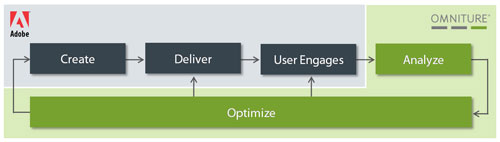
  • Adobe "branding & rich media marketing focus" will bring Omniture in this direction – shying away from anything that is beyond online marketing (from ads to presentation layer).
  • IBM history of "middleware integration" is in the opposite direction - probably bringing Coremetrics as an integral part of WebSphere (closer to the logic layer).
  • WebTrends, who's been trough rough times over the past 10 years still puts off a good fight as one of the major player. The single guy in the room will definitely be looking for a new mate - and I speculate Microsoft could be such a fit.
  • Google is Google, right? The mission remains so simplistic and so powerful "to organize the world's information and make it universally accessible and useful". They are on the right path but being at the top of the hill also makes you an easier target - including claims that Google Analytics is being subsidized trough Google AdWords... a practice that could be considered to be "unfair competition".

What else?

The “extremes” probably won’t remain between Google on the "low-end", and Omniture on the "high-end". I'm quoting those terms because they are mostly irrelevant by now. As Avinash put in his keynote at the last eMetrics Toronto "it's easy to do better than your competitors when you don't have to repeat their mistakes". Google Analytics will keep improving and in some respects it already offers more than some paid vendors. Furthermore, not everyone will want to venture in IBM long, expansive approach… and not everyone is a friend of Adobe either (not mentioning the dim future of Flash, one of the flagship product of the company).

As the market consolidates, new players can emerge and the online analytics ecosystem is still far from maturity. There are plenty of opportunities for innovative startups to fill specific needs.

Who else?

While thinking about other players I tried to extract the "unique selling point" - what makes this player different from others. Of course, this is my own appreciation and I would love to hear your feedback and own perspective.
  • Unica: Although I haven't had a chance to use Unica extensively, the feedback I hear about their data model and flexible interface is always positive. They are particularly well suited to integrate any data source and grow as more complex requirements emerge.
  • Webtrekk: The EU web analytics market is quite fragmented, but some players, like Berlin-headquartered Webtrekk, have developed the business within the unique requirements of this market. They are particularly sensible about privacy and legal considerations. As such, Webtrekk might be particularly good for some types of environment such as banking and other financial services.
  • AT Internet: The privately held, French company is not a new comer and boast an impressive client list in France. Their unique value proposition includes personalized consulting services, effectively avoiding the risk of "judge & jury" often found when the web agency developing the site is also the same reporting on site performance. I had also posted a review of AT Internet latest NX product.
  • KISSmetrics: the startup, which product is now available, is already sending very good vibes in the market. Crafted by experienced entrepreneurs and benefiting from strong financial backing, the fresh approach to web analytics promises to bring a powerful yet very intuitive interface specifically focused on people and conversion.

My take

Those are just a few players in the online analytics ecosystem - I didn't mention voice of customer players such as Kampyle or iPerceptions, or even very specialized tools such as Tynt or PostRank. As the market mature, larger players will continue to expend horizontally, aiming at acquisitions of complementary tools.

At the same time, nth generation vendors will come up with fresh alternatives that will bring a different perspective to such things as the tagging nightmare, real-time slicing & dicing capabilities, data integration and above all, a stronger business focus (as opposed to marketing-centricity).

Wednesday, May 19, 2010

Random thoughts from eMetrics

eMetrics London is over, Paris is next! It was my 11th time speaking for eMetrics since 2007. Over time, some thoughts have emerged... make your pick and please, jump in and lets have a healthy conversation!
  • Forget about web analytics and marketing - welcome analytics and business optimization
  • Forget about multivariate testing, behavioral targeting, multiple data source integration - you are not a Fortune 1000
  • We will revolutionize business optimization trough analytics - what makes you think so?
  • Social media is not about marketing - it's about people

Forget about web analytics and marketing

Welcome analytics and business optimization.

I've never been a fan of the term "web analytics", nor am I of "marketing optimization". As if the only thing we had to measure and optimize was a web site and online marketing campaigns. The reality is much broader and complex than that: we need to look at the online ecosystem and beyond, we need to dive into business processes - we need to evolve toward business intelligence (the expertise, not the technology) and business analysis. The limits of marketing lies in its ability to dump a truckload of visitors into a broken business process. Marketing ends where you can't figure out how to deal with IT - those who have the expertise and the knowledge of business processes automations that are far less trendy than measuring sentiment on Twitter but immensely more important to the business bottom line!

Forget about multivariate testing, behavioral targeting, multiple data source integration

You are not a Fortune 100 (...if you are, I'm glad you are reading my humble blog!)

At conferences we are inundated with showcase from the best of the best - those who are fully and thoroughly leveraging online analytics, we are speechless witnesses of double-digit improvements anecdotes, carefully rehearsed messages of wisdom carefully crafted to fit in 140 characters. We drool at multivariate testing and behavioral targeting, happily slicing and dicing data from a ton of different sources, amazing visualizations created off dynamic segments... Those "maturity model atheists", as someone once put it at eMetrics San Jose, simply do not need an Online Analytics Maturity Model for the simple reason they are beyond that - they are competing on analytics and have achieved online analytics nirvana (well... kind of). For the rest of us, we have to get down to earth and learn about the most optimal and realistic path to online optimization through analytics. Be it Europe, Canada or most organizations in the US, there is an immense need for guidance and best practices.

On the bright side: tip of the hat to Michael Gulmann from Expedia for revealing how analysts became the decision makers of anything related to site and process improvements - and how they made mistakes and learned from them.

We will revolutionize business optimization trough analytics

What makes you think so?

At the end of eMetrics Toronto I was moderating a panel on the future of web analytics. Although it was a very interesting panel and the crowd participated very well, it left me with a bitter taste. Ask a bunch of hockey fans in Montreal who will win the Stanley cup and you are bound to hear it's the Canadians, no doubt. Ask a bunch of marketers doing web analytics about the future of the industry and you are bound to hear them claim they will do better than the "white coats in the basement" (aka business intelligence people)...

Our industry suffers from its small scale and navel gazing - happily nodding at unison when someone says web analytics is hard. At eMetrics we see more vendors and consultants than practitioners - let alone managers and true decision makers. Everyone is very polite, doesn't want to make any waves - so there is no real debate, not even an "agreement to disagree" - and as a consequence, our industry remains marginalized and evolves too slowly. This is not a critic of eMetrics, this conference plays an important role in the market, but if we are to redefine the future of analytics and business optimization, it would be about time to invite the rest of the team to the lobby bar!

Social media is not about marketing

...it's about people.

A shorter rant to finish off. I'm a bit frustrated with all the craze about Facebook and Twitter. As if businesses couldn't exist without them, as if the soul of any customer was hidden somewhere in social networks and would be revealed by some clever marketing tricks or astroturfing tactics - the picture of worms coming out after rain comes to mind!

Ok, now we've got a couple of topics to think about and get the conversation going!

And if you don't, you are forewarned, I'll post other random thoughts! :)

Monday, March 8, 2010

Web Analytics Association: my take as a Director

A little more than a year ago I took the plunge and announced my desire to run for the Web Analytics Association Board of Directors and it's now time to enroll if you want to serve in a leadership capacity and help drive the strategic direction of the Web Analytics Association. I'm now halfway trough my call of duty. When I announced I was running for it, I quoted Tom Davenport and shared my views on the biggest challenge facing the digital marketing industry:
"three things are at the basis for competition: efficient and effective execution, smart decision making, and the ability to wring every last drop of value from business processes - all of which can be gained through sophisticated use of analytics"
In a subsequent post, I added:
Beyond stats, web sites and businesses, there are people. After all, some things don't change that much even after thousands of years. We still want to get around the campfire and listen to the sage, help the apprentice, be part of the group and make our mark. Maybe that's why, in essence, I'm running for the Web Analytics Association Board of Director.

Accomplishments

What a year! During the past 12 months I became a Director and the Treasurer of the WAA. I participated on numerous Board meetings, comity discussions, email exchanges. I got actively involved in the Championship, UBC tutoring, along with other volunteers we launched Web Analytics Without Borders, I got involved in the site redesign, and I'm now going on the Certification advisory comity and we just confirmed the hiring of Mike Levin as a full time Executive Director. I did a number of social networking events, spoke at eMetrics, I reviewed the social media standard proposal and I'm sure I'm forgetting a couple of things.

It requires commitment and I'm not even getting paid to do it. Am I complaining? Absolutely not! The rewards are numerous: a sense of accomplishment, a feeling of doing something that can make a difference, a passion for the field. On top of that, you get to meet with the top influencer and most brilliant people in the industry. After all, when do you get to share lunch with managers from WebTrends, Yahoo! and Omniture? When can you share tips with practitioners from Dell, Microsoft and Sony or meet consultants from all around the world?

My take

When I hear people complaining web analytics is hard, or the WAA is too US centric and not present enough internationally, or UBC courses should be updated, or the recently launched site has broken links I have to bite my tong. It's a lot easier to wait for things to happen than it is to get involved and try to make a difference. It reminds me of the people who kept complaining about their job but stayed there for 20 years... It takes faith and guts to become a leader and a change agent.

Our industry is evolving fast and some of what we do might very well become irrelevant or absorbed in other disciplines. But before getting there - I should say while we get there - you can help. The Association is what we want it to be. You can be an outsider pulling on your side or you can be an insider genuinely helping the community. You can wait for things to happen or you can make things happen.

Maybe you don't have the time and energy to become a Board Member - become a member and get involved! If you do, the WAA is seeking committed and motivated individuals to run for election to the WAA Board of Directors. You have until March 15th to submit your candidature.

Monday, March 1, 2010

Book review: Analytics at work by Tom Davenport


I have mentioned the work of Tom Davenport numerous times on this blog. For those who don't know him, he is a Babson College professor, Accenture fellow, author, speaker and renowned consultant. I particularly liked two of his previous books: "The Attention Economy: Understanding the New Currency of Business" and "Competing on Analytics: The New Science of Winning". His latest one, entitled "Analytics at Work: Smarter Decisions, Better Results", goes deeper in how leading businesses are gaining a competitive advantage through analytics.

First impressions

If you haven't read "Competing on analytics" go there first, it's a must for any serious online analyst. Also be forewarned this is about "analytics" not "web analytics" nor "online analytics" - a subtle but very important distinction.

Whenever I read a book I take margin notes and fold the page corners. This simple method is some kind "engagement" metric: 19 folded pages out of 188 (or 10%) - not bad! But be forewarned this is my own appreciation, biased by my experience and interests.

There are some gems worth noting, like the simple "Key questions addressed by analytics" table (ref. Figure 1-1) showing Past, Present, Future on the top, and Information, Insight on the left. For example, the intersection of "Information/Past" is "What happened? (Reporting)" but "Insight/Past" is "How and why did it happen? (Modeling, experimental design)". Neat and simple.

I also liked "the best decision makers will be those who combine the science of quantitative analysis with the art of sound reasoning". Seems obvious, no? But this is always a topic of passionate discussions among the tenants of "creativity" and those of "analytics".

DELTA - Data, Enterprise, Leadership, Targets, Analysts

The book is structured around the DELTA acronym. Certainly a good play on the Greek Delta letter which signifies "change". Each chapter introduces the requirement and characteristics of the acronym letters as well as a self-assessment of maturity stages. The remainder of the book talks about developing the culture of analytics.

In chapter six, "Analysts", Davenport defines analyst as "workers who use statistics, rigorous quantitative or qualitative analysis, and information modeling techniques to shape and make business decisions". He also provides definitions for various roles, including that of "Analytical Semiprofessionals" who "apply the models and algorithms developed by professionals" - which is probably the case of most web analysts today.

My take

It's a great book for organizations that wants to develop a competitive edge using analytics and an excellent academic reference. If you are into online analytics, as I suspect most readers of this blog are, you might feel a bit overwhelmed by the topic. My concern is few of us are involved with truly analytical companies like the Expedia or Amazon of this world. If you feel "web analytics is hard", this book will be depressing! At best, if you are a web analyst you would probably qualify as "Stage 1: Analytically Impaired" or "Stage 2: Localized Analytics" in Davenports analytical maturity model. Basically, as stated in my proposition of the Web Analytics Maturity Model, Davenport model takes where the WAMM levels four and five ends.

All in all a good read with strong supportive arguments and an efficient way of assessing your maturity. However, probably not as interesting for those just starting up in web analytics or whose role is limited to online analytics and optimization.

Friday, January 22, 2010

Of data and intuition; web analytics models and frameworks

We strive to convince managers of developing a data-driven culture instead of relying on what seems to be emotional, arbitrary and political decisions. We despise the HiPPO and try to tame the beast in various ways. Data, experience and some intuition have a role to play in making good business decisions. As Jim Sterne puts it in Data, Data Everywhere and Not a Thought to Think, "Data is good. Data is valuable. Just don’t be black and white about it. You can use data to help you and you can use data to trap yourself."

Training & education: again!

Developing critical thinking is one of the primary role of education - once you understand the fundamentals behind something, you can more easily extend your knowledge to more complex, difficult and unexpected situations. There is an ongoing debate between those who think quick hands on experience with specific tools is a better career strategy than getting educated about concepts of marketing, statistics, management and online strategies.

As with data, nothing is black or white.

Implying the only value businesses are looking for are tools masters would be a huge mistake. As web analytics evolves from marketing centricity to become online analytics and business analysis, would-be web analysts are faced with a dilemna: get hands on experience with specific tools to quickly get a job or gain more education to master the core concepts of doing business online.

Of course you need to get started in analytics and experience is key, but everyone knows knowledge is power. In my opinion, keeping less experienced professionals entrenched in a role of "tool X expert" is a short term strategy to get a job - not necessarily a bad one - but certainly not a long term career objective.

Data vs intuition

Jim Sterne's most recent post cautions us about the blind faith in data and the role of intuition in the business management decision process.

The New York Times touched on this topic some time ago:  “debate between intuition and empiricism is as old as Plato, who thought that knowledge came from intuitive reasoning, and Aristotle, who preferred observation. The argument has seemed especially intense lately, as one field after another has struggled to define the role of human judgment in a data-saturated society… These disagreements can sometimes be exaggerated, because everyone agrees that intuition and empiricism both have a role to play. But the fight over how to balance the two is a real one.”

Turns out this article talks about the field of medicine, not web analytics!

From ad hoc to structured

In the same New York Times article, a doctor is quoted as saying "You cannot write a protocol that perfectly fits any patient" - just like a model purpose isn't to be taken as the universal truth. Yet, doctors spend years studying factors leading to countless diseases and medical conditions. Maybe more than any other discipline, medicine is hugely dependent on "models" and "frameworks", or more commonly called "clinical protocols". Of course, not everyone can or wants to be a doctor.

Even if there are some critics against the value of maturity models, they are inevitable. Eventually our beloved industry will become more commoditized and replaceable because that is the nature of business evolution. Tools will continue to quickly evolve, but as Jim Novo brilliantly exposed in a recent forum post: people should learn to "think for themselves about analytical problem solving in a business environment, to develop their own creativity in problem solving rather than following robotic formulas that may lose relevance over time".

Models, frameworks and expert systems

Voltaire said “it is dangerous to be right in matters on which the established authorities are wrong”. Surprisingly enough - or maybe not - according to Wikipedia, the words "model" and "framework" share some similarities in their attempt to create a description of a complex entity or process.
Model: is a pattern, plan, representation, or description designed to show the main object or workings of an object, system, or concept.
Framework: a basic conceptual structure used to solve or address complex issues, usually a set of tools, materials or components.
Source: Wikipedia
Admittedly, both terms suffers from being dismissed as buzzwords and fashions.

Proposing a framework without a conceptual model is a way to keep a mystical aura around the underlying concepts and justifying claims that web analytics is hard. A framework without a model is like doing the grocery without a menu: you will eat something, but the results won't be optimal. You will not only waste valuable resources, it will also cost you more.

From model to framework, to decision support

If you have read the Web Analytics Maturity Model you should have received an email soliciting your feedback. The volume of constructive comments reinforce my opinion that WAMM is proving to be a valuable tool to asses the maturity of web analytics.

Pushing the concept from model to framework, we can envision the possibility of an expert system that would assist analysts - relieving them of trivial tasks and growing their expertise through knowledge sharing and collaboration. Akin Arikan, from Unica, suggested we should develop a Clinical Decision Support System for web analysts, just like those found in the field of medicine. I think this is a valuable objective.

Defining models, frameworks and expert systems requires a robust approach. Something more often found in academic and scientific research than spontaneously surfacing out of commercial interests. They need to be independent of too strong a vendor or consulting influence. Once initially defined, they need to be put to the test, be peer reviewed, become as broadly accepted as possible and evolve over time.

Next steps for the Web Analytics Maturity Model

Socrates said "There is only one good, knowledge, and one evil, ignorance". He also said "The only true wisdom is in knowing you know nothing".
  • I love to get your feedback! Peer review is an essential element of the process.
  • I'm also working on methods to gather empirical data while the model continues to be adopted by web analytics practitioners, consultants and agencies around the world.
  • Workshops and conference sessions are being planned in several cities.
  • And lastly, I have to keep the hood on one last element that will be available to those who wants to get more involved.

    Saturday, December 19, 2009

    My take: Web Analytics Without Borders - learn, collaborate, help

    "I'm not sure how I landed here". This was a way of saying that growing in the online analytics industry is often like a long path with several crossroads that could have lead somewhere else, high mountains and challenges to tackle, a sense of accomplishment, but also a down to earth knowledge the road ahead is full of surprised and opportunities to learn. On this path I met several new friends and mentors who were kind enough to help me and point the right direction. I also did my share of mistakes, had bad experiences, stupid managers and occasionally met self-proclaimed prophets. The path is different for everyone, but the story is probably similar.

    I was a volunteer medical first-responder for nearly three years. During the day I was the techie, the geek, the web architect. At nights and weekends I was volunteering to help others in what is by far the most important: life. Sometimes I was the helpless witness to tragedy, pain, suffering, cries and death. I comfort myself in thinking I made the smallest of a positive difference.

    We all have careers, we all are very busy, and we all have our own objectives. There is nothing wrong in trying to grow our career and work hard to make a good living. It's even better if we can become better persons along the way.

    This, in essence, are the reasons of my involvement in the Web Analytics Association - Save The Children "Web Analytics Without Borders" project: to genuinely and sincerely help.

    How it got started

    In July I got an email from Adam Laughlin, newly appointed web analyst at Save The Children, asking about  using WASP to check the quality of the Google Analytics and WebTrends implementation on savethechildren.org. I though providing a free license was a small way to help out. One thing leading to another, and I guess because of my role as a tutor of the UBC Award of Achievement in Web Analytics, Adam asked me about tips to define good online objectives and a strategy to increase outcomes for the children. I suggested he take a look at the concept of Web Analytics Maturity Model as part of a problem solving approach to help SaveTheChildren. We quickly got into a very interesting discussion about learning, sharing and helping. I recommended he came to eMetrics to have an opportunity to learn from thought leaders, particularly Alex Langshur, president of the WAA and PublicInsite, who has done a lot of work for non-profit organizations, as well as meet with fellow practitioners. He had no budget - we shared a room.

    At about the same time, two involved members of the WAA, Daniel Waisberg and Kris Groulx were working on a similar idea. We quickly saw the opportunity to work together for the greater good of everyone: analysts, the WAA and NGOs.

    Web Analytics Without Borders (WAWB)

    We spent a lot of time defining the goals of WAWB, how it would work, how we would offer guidance and mentoring to help WAA members who wants to learn in a real, large-scale and representative environment. Over the years tutoring at UBC, following the analytics forum and getting personal emails I've continuously heard this kind of request. It's fairly easy to get volunteers, it's slightly harder to get dedicated volunteers, and a whole different thing to get organizations, even NGO, to "open up the kimono" and show the naked truth about their numbers. For that, I thank and salute the willingness of Save The Children to participate in this project.

    We discussed the project at the WAA Board retreat in September. Sadly, we didn't have time to go through the final details and get Board approval to launch the project. We were getting ready to launch it officially in November, then December, then January... The WAA being open, some information about it was publicly available and I had already talked about it on my blog in September.

    Next steps for WAWB

    We are already accepting volunteering efforts from WAA members and in January we will roll-out the collaborative environment. Why WAA members only? Because we believe in the WAA mission: "lead and support the members by providing quality education, developing standards and best practices, conducting research and advocating for issues that advance the industry". In order to achieve this mission we rely on volunteers, people like Adam, Daniel, Kris, myself and so many others. Maybe even you!

    The project is built along principles similar to crowd-sourced or open source software projects. There will be various ways of getting involved and contributions will be reviewed and commented through peer review and mentoring. As Adam stated, "Save the Children will share team goals, processes, scope, and objectives, allowing WAA members to become part of our team". Participating volunteers will have access to web analytics tools, but success isn't much a matter of tool, but much more a matter of structured efforts and change management.

    Education is about gaining knowledge and competencies, such as mastering the concepts of statistics, marketing and technology in order to truly understand what web analytics is all about. This is the UBC program and other universities mission (for the French-speaking community, check out the new full-semester, MBA-level online anallytics course: "MRK-6005 Analytiques Web"). Training, on the other end, is more about acquiring specific skills, such as hands on learning of how to use Google Analytics. Generally, employers will look for trained people, while employees will seek education as a way to advance their career. The balance between the two is important to increase and sustain your value in the market.

    And how does one prove its value in the market? That's the WAA Certification objective. It is a way for those who have achieved a certain level of experience and expertise to be recognized. Because there is still no unique path to become a proficient analyst, we need an independent, unbiased and credible way of evaluating our market value: the Web Analytics Association.

    The WAWB doesn't replace education or training, it offers a playground and opportunity to help children in need grow up safe, educated and healthy, and better able to attain their rights.

    If you want to get involved, become a WAA member and send an email to waa.membership[at]webanalyticsassociation[dot]org.

    Saturday, December 12, 2009

    What's holding back web analytics?

    About everyone in the web analytics industry knows Eric Peterson. He's been an early evangelist. He wrote the "Big Book of Key Performance Indicators", which, to this date, remains an excellent reference for anyone starting in the field. He also leveraged a fantastic idea from June Dershewitz called Web Analytics Wednesday.

    Eric asked on Twitter:
    "What do you think is holding the #measure industry back? Pls share!"
    Replies were plenty.

    Incidentally, two days earlier, someone for whom I have the utmost respect spent an amazing amount of time shedding light on the web analytics industry. Joseph Carrabis is an amazingly bright person who is somewhat of an outsider to the web analytics industry, and thus, can shed a different light on it. He looked at us, collectively, asked questions, and shared some very interesting thoughts in Part 1 and Part 2 of "The Unfulfilled Promise of Online Analytics". Joseph is an observer, a listener, a thinker, and a very honest and respectful person. Joseph opened up a conversation.

    Back to the Twitter thread

    @immeria: @erictpeterson wht's holding #measure back? My take is the Web Analtyics Maturity Model http://bit.ly/fAavu Nevr got feedback from U abt it

    @erictpeterson: @immeria I'm not a believer in the value of models. I worry that they are the new "Web analytics is easy."

    @immeria: @erictpeterson What's holding back #measure? Additional comments in my nod to @JosephCarrabis at http://bit.ly/4CAvEc #measure

    @immeria: @erictpeterson never claimed WAMM would make #measure easy, but certainly easier. It's a start, don't you think?

    @erictpeterson: @immeria let's agree to disagree, shall we? Either way, glad you got an A+ on the thesis paper. Congrats!

    @immeria: @erictpeterson Solving problems when #measure is "hard": 1) acknowledge the problem 2) understand it 3) act to solve it. WAMM helps do that

    I waited and thought about this thread because I simply don’t get it. I was to reply privately but decided to post a public response instead. The comment “let’s agree to disagree” is what Wikipedia defines as a "thought-terminating cliché". Hopefully, this will be a way to continue the conversation because without conversation, there is no learning, and no evolution.

    So, what's holding back web analytics?


    My opinion, based on 18 months of study on top of over 20 years of experience that led me to this industry - looking at other fields of expertise and interviewing practitioners around the globe - it turned out there were some clear patterns. The result is a proposal for the Web Analytics Maturity Model - a document where I ask for feedback and peer review.

    I received and continue to receive amazing feedback about it. Even when something looks wrong, people offers very constructive feedback. That's perfect: it's the goal of peer review. Very few people ever said something against this work. "I don't believe in models, they are the new "web analytics is easy"" and bold claims like "I'm a maturity model atheist" are really the exception and as you guess, offer no solution.

    There seemed to have a level of consensus in previous research (lets not call them “models”) and among the feedback I gathered.

    What's holding back web analytics is:
    1. A lack of trust, engagement and support from management: the 1st "pillar", or critical success factor.
    2. Unrealistic or undefined objectives & scope: the 2nd & 3rd key success factors.
    3. Nonexistent change management, politics and bad communication.
    4. Lack of process and best practices: the "Team & expertise" dimension of the model.
    5. Difficulties in taking action, going into a continuous improvement process that brings positive outcomes. The 5th dimension of the model.
    6. Technology was the least important of the factors leading to a successful, positively accepted web analytics program.
    Joseph concluded to similar issues when he said "So far three matrix elements — time, a lack of leadership and realism — have been identified". If they were to be regrouped, the Twitter replies to Eric would pretty much fall in one of the above six categories.

    People can tell me I'm off track with the Web Analytics Maturity Model - everyone is entitled to an opinion. But critics should lead to suggestions. The concept of a model - although not perfect and obviously open to improvement - as proven a valuable tool to facilitate assessment of organizations web analytics status and spark constructive discussions. That being said, I repeat, a "model" is NOT a black magic recipe to success. I'm also warning that using the model as a comparison tool between organizations is not necessarily a good use of it.

    Let's continue the conversation

    I'm open to any and all types of comments, positive or not, as long as they are respectful an not bold unilateral statements. I invite people to collaborate and participate in the conversation, either here or through Joseph's excellent threads. Tweet @immeria or feel free to email me privately at shamel67@gmail.com.

    Thursday, December 10, 2009

    A nod to Joseph Carrabis: The unfulfilled promise of online analytics

    <Side Note>

    I'm not sure how I landed here.

    • I had poor grades in high-school.
    • The career adviser said I shouldn't apply in computer science - I had no chance. I did anyway.
    • I loved computer science. I was a hacker - yes, it was me who shut down the mainframe to get exclusive access to finish my homework...
    • In 1986 I had to pick an internship. I picked an obscure Unix/C research project with University of Montreal while my classmates headed for IBM/Cobol and Fortran in banks and insurance - I was crazy!
    • "Unix will die" they said, "C will never pick up". But I was on the Internet in 1986 - before the Web ever existed.
    • Work - Unix sys-admin and Oracle DBA. Then HTTP & Mosaic - it was natural.
    • Logs, like any other computer system. Unix scripts to automate; soon enough the data was in Oracle.
    • Web development, web strategies, ebusiness, measurement & optimization.
    • Needed more business & management credibility - I did my MBA.
    It's been over 20 years. I'm still a child in a candy store.

    < End of side note >

    The chasm

    The Internet was built on collaboration, the early days of the Web were, as  is  was web analytics. The web analytics industry is at a crossroad. Vendors are fighting for a share of the pie, competing for the latest cool feature while trying to capture as much profits as possible from their clients and locking them down along the way. Newbies are flocking to the field, just as it was some time ago for the Web - anyone and everyone is an expert. Self proclaimed gurus ego are inflating exponentially with the number of "friends" they have.

    We are craftsman. We improvise custom solutions to old problems - optimizing processes, measuring success, managing change and politics. We pride among ourselves for finding new clever ways of measuring social media and inventing new metrics nobody else understands when we can't even get five minutes with senior managers to improve their business.

    We go at conferences, gang in discussion forums and Twitter to convince ourselves we are so right - we know what's wrong and how to solve it. The "outsiders" can't understand, they don't get it - so we think.

    The unfulfilled promise of online analytics

    Joseph Carrabis "The Unfulfilled Promise of Online Analytics - Part 1" was thought provoking and several people contributed to the conversation - it's a shame some people retracted or didn't even participate. Joseph, with his unique style and outsider perspective, published the second part. Anyone in the analytics space should read it - vendors and gurus must read it - and comment.

    Joseph takes great care in being respectful and always ask for permission and opinion before quoting or talking about someone. As soon as I got his email I took a glimpse at it - thinking I would get back to it later... then I stopped everything else and read the whole thing.

    There are several gems in his document:
    • Please remove my comment
      It takes a lot of honesty and tact to talk about those who requested their comments be removed...shame on them for a) not standing by their opinion and/or b) not accepting they might be wrong.
    • The Setup to Fail Syndrome
      "There is also a need to recognize what's achievable when (so people aren't set up to fail) and how to promote faster adoption of an agenda". It reminds me of a book I read: "The setup to fail syndrome", by Manzoni and Barsoux. I read that when, at a particular job, I went from "fame" to "looser" because the context changed (got a new boss). Success is also (mostly?!) a matter of context...
    • I'm playing, don't bug me
      "Management repeatedly asking difficult to solve questions results in they're being ignored by analysts until the final results are in. By that time both question and answer are irrelevant to a tactical business decision".
      "This means such institutions - which require experienced practitioners to survive - will only be able to afford low quality/low experienced practitioners to help them. This can be likened to a naval gunnery axiom: "The farther one is from a target, either the larger the shell or the better the targeting mechanism" and companies will opt for larger shells (poorly defined efforts) rather than better targeting mechanisms (experienced practitioners)." 
    • Let's find something cool to do
      "We're suppose to be solving problems. But I can't figure out what problems we're suppose to solve."
    • Act quickly, think strategically
      I loved the prognosis/diagnosis example and "Investigation takes time and only certain businesses can afford time because unless the science is working at overcoming a business obstacle, it's a cost, not a profit."

    A maturity model

    I'm grateful Joseph mentioned and acknowledged the usefulness of my work on the Web Analytics Maturity Model to advance the field. When Jim Sterne introduced me during the WAA annual members meeting he said "I don't know how to present Stéphane", referring to the fact I have a technical background and recently completed my MBA... but mostly, I guess, because of my passion for the field and my willingness to share. Others have publicly or privately acknowledge my work and provided honest feedback - positive or not. Ultimately, there is no evolution without collaboration.
    I asked Stephane if he believed WAMM provided a metricizable solution with universally agreed to objective measures (I told Stephane that I wasn’t grasping how WAMM becomes an "x + y = z" type of tool and asked if I’d missed something). Stephane replied "…no, you haven’t missed anything, because it is NOT a x+y=z magical/universal formula, that’s not the goal. The utmost goal is to enable change, facilitate discussion, and it’s not ‘black magic’. A formula would imply there is some kind of recipe to success. Just like we can admire Amazon or Google success and could in theory replicate everything they do, you simply can’t replicate the brains working there – thus, I think there is a limit to applying a formula (or ‘brain power’ is a huge randomized value in the formula)."
    Then there are "maturity model atheists" - those "who've been there, done that"... Such positions gives very little room for discussion. My feeling is they are standing so high on their pedestal, busy working with the top organizations, that they've lost empathy with those struggling to make things happen - at their scale and with the capacity they have.
    One key element to remember is "you can excel along any axis... but to be successful you need to excel evenly along all axes... so far three matrix elements - time, a lack of leadership and realism - have been identified".

    "So there better be a 'right way to do it', at least as far as delivering results and being understood are concerned, because without that the industry - more accurately, the practitioners - are lost". I hope we will find this way together, honestly collaborating and being open minded, because I love what I do.

    If we don't? "any industry that succumbs to promise and hype will ultimately end in disappointment".

    Tuesday, October 20, 2009

    Google Analytics new features: my take

    It is now entrenched in tradition: Google Analytics makes announcements at the eMetrics Marketing Optimization Summit. So here's the latest, straight from the eMetrics floor where analytics evangelist Avinash Kaushik is addressing a jam packed room of enthusiastic web analysts!

    Introducing Analytics Intelligence

    The feature that excites me the most is something I discussed privately with Avinash a while back: once we spot a dip or spike in a metric, I shouldn't have to manually dig for the other metrics that are correlated with this significant change. The tool should be smart enough to point me to the other few metrics that have the highest correlation with this change.


    Here's an example: conversion rate is significantly down. Ok... What does it really mean? Is there a spike in traffic? Or is there an issue in the process leading to conversion? In the former case, it means I'm bringing more unqualified traffic to the site. I can then review my Traffic Sources to easily pinpoint the issue. In the latter case, it means my conversion process as deteriorated or is failing at persuading people to convert.


    Other features

    There is also a host of new features (on top of the previously announced beta features):
    • Alerts! Once you have a good baseline, you want to be alerted of outliers: values significantly going beyond the historical trend. You can easily set up daily, weekly and monthly alerts.
    • Multiple custom metrics: adding "custom attributes" to visitors/visits is an essential feature of enterprise-level web analytics solutions (but I wish there was also custom metrics at the page level Can have custom metrics at page, visit, visitor level - without limitations!)
    • Multiple-rule filtering: now you can more easily filter reports by building multi-criteria on-the-fly filtering rules.
    • Goals, more goals! (20) of them instead of four.
    • Segment unique visitors: something that should have been there from the beginning
    • Mobile analytics
    More info at the Google Analytics official blog.

    My take

    Google keeps adding new features that challenges the traditional web analytics vendors. I have witnessed exactly the same phenomena in the high-end 3D animation/special effects software industry. When you are an industry leader enjoying high margin on product and services, you accordingly spend a lot of money on R&D. However, when you reach a certain feature set level, adding new innovations becomes exponentially expensive. At the same time, lower (and free!) tools can easily look at the top-line products and replicate and improve upon those features. Basically, the industry is leveling itself off, becoming a commodity: data collection & storage costs are being eliminated, intelligence and automations are being built in. This is obvious  when a competitor you dismissed as being "irrelevant" can relatively easily replicate your unique value and offer a much cheaper (and free!) product. Even more if the true value of a product is being subsidized by other sources of revenues (ads in the case of Google).

    The only alternative becomes to expand horizontally. Develop a suite of products. And this is exactly what Omniture has been doing over the past few years. Once it's done, or when you can't financially sustain the model, the way out is to move higher in the food chain... Adobe's acquisition of Omniture for example.

    What does it mean for the web analytics industry?

    As a member of the Web Analytics Association board of directors, any major shakedown in the industry raises some interesting questions. It is clear to me web analytics industry as we know it today won't exist in two or three years from now. Commodization of web analytics is not inherently a bad thing and is a demonstration of a maturing industry. To me, the path clearly points toward analytics, analysis: business analysis and process optimization, or what some call "business intelligence". On the way to the future, Google mammoth is likely to put several players to extinction...

    Wednesday, September 16, 2009

    Adobe + Omniture + WPP = game changer

    Twitter was on fire!

    A short post to share my thoughts. I won't go into a long rambling about it.

    Some deep thinking and speculation from all horizons. For the most part, people didn't see it coming... why did Adobe purchase Omniture? To make Flash tagging easier?

    That’s not the point.

    This picture clearly says what it's all about:
    Adobe + Omniture means they will be looking at the whole value-chain process of developing website content and applications. This is far beyond making it easy to tag Flash!

    Also, don't forget the huge strategic agreement with WPP. Add up Adobe + OMTR + WPP and you’ve got a major player who can change and steer the industry.