Showing posts with label Omniture. Show all posts

Thursday, August 26, 2010

How do you debug Adobe/Omniture SiteCatalyst implementations?

There is a fascinating discussion on "How do you debug Omniture SiteCatalyst implementations?" on the LinkedIn Omniture Enthusiasts group.

People proposed various tools and the conversation is evolving into the tagging QA process. Obviously a topic close to the work I have done on the Web Analytics Solution Profiler.

Quality assurance of tags: an old issue

For the little story, I made the first version of WASP available in October of 2006 and before that I had spent a lot of time doing implementations and was faced with the quality assurance process. I guess I have spent a significant amount of time on this issue! For those who might have missed it, here are some of my previous posts on the topic of tags quality assurance:

How much can you test manually?

There are huge challenges in the QA process cycle. Manual testing is long and error prone (either with Firebug, HTTPWatch, Fiddler, IEWatch, Charles) and external scans (like Observepoint or SiteScanGA) are not always the best solutions for sites under development/behind firewall/secured.

Testing content areas driven off templates is fairly easy: identify a couple of pages using each of your templates and test only those, not the whole site. In WASP, you can start a crawl by specifying a local text file where you simply put the list of specific links you want to test.

Testing "processes" (checkout, registration, etc.) is particularly difficult but if I may preach for WASP again, one of the huge benefit is being "in context" - it can record the data as you go. You can use a session recorder and playback solution (I used DejaClick from AlertSite) but there are whole suites specifically built to facilitate the QA process in web development. Basically, you can record this part of the session and simply play it back whenever you need to test... and WASP will happily record the data so you can export it to Excel and check it out afterward.

A simple approach

Simply put, make tags QA an integral part of the overall web development QA process - whenever a template is modified or a process is touched it should be QA'ed again. There are usually "repro scripts" that are used to make sure the latest bug fix (related to tagging or not) doesn't break anything. Use those exact same scripts for tagging QA. It certainly requires IT & marketing collaboration, but I guess there is no easier alternative. Anyone who's been involved in web development knows no automation tool will magically pinpoint errors on your site... Make "quality" an integral part of your job!

Wednesday, June 30, 2010

Web analytics industry transformation (con't)

Not to beat a dead horse - but after sharing my views on Adobe-Omniture, IBM-Coremetrics and speculation about Microsoft-Webtrends some people inquired about my views on the fate of other vendors.

Let's recap:
  • Adobe "branding & rich media marketing focus" will bring Omniture in this direction – shying away from anything that is beyond online marketing (from ads to presentation layer).
  • IBM history of "middleware integration" is in the opposite direction - probably bringing Coremetrics as an integral part of WebSphere (closer to the logic layer).
  • WebTrends, who's been trough rough times over the past 10 years still puts off a good fight as one of the major player. The single guy in the room will definitely be looking for a new mate - and I speculate Microsoft could be such a fit.
  • Google is Google, right? The mission remains so simplistic and so powerful "to organize the world's information and make it universally accessible and useful". They are on the right path but being at the top of the hill also makes you an easier target - including claims that Google Analytics is being subsidized trough Google AdWords... a practice that could be considered to be "unfair competition".

What else?

The “extremes” probably won’t remain between Google on the "low-end", and Omniture on the "high-end". I'm quoting those terms because they are mostly irrelevant by now. As Avinash put in his keynote at the last eMetrics Toronto "it's easy to do better than your competitors when you don't have to repeat their mistakes". Google Analytics will keep improving and in some respects it already offers more than some paid vendors. Furthermore, not everyone will want to venture in IBM long, expansive approach… and not everyone is a friend of Adobe either (not mentioning the dim future of Flash, one of the flagship product of the company).

As the market consolidates, new players can emerge and the online analytics ecosystem is still far from maturity. There are plenty of opportunities for innovative startups to fill specific needs.

Who else?

While thinking about other players I tried to extract the "unique selling point" - what makes this player different from others. Of course, this is my own appreciation and I would love to hear your feedback and own perspective.
  • Unica: Although I haven't had a chance to use Unica extensively, the feedback I hear about their data model and flexible interface is always positive. They are particularly well suited to integrate any data source and grow as more complex requirements emerge.
  • Webtrekk: The EU web analytics market is quite fragmented, but some players, like Berlin-headquartered Webtrekk, have developed the business within the unique requirements of this market. They are particularly sensible about privacy and legal considerations. As such, Webtrekk might be particularly good for some types of environment such as banking and other financial services.
  • AT Internet: The privately held, French company is not a new comer and boast an impressive client list in France. Their unique value proposition includes personalized consulting services, effectively avoiding the risk of "judge & jury" often found when the web agency developing the site is also the same reporting on site performance. I had also posted a review of AT Internet latest NX product.
  • KISSmetrics: the startup, which product is now available, is already sending very good vibes in the market. Crafted by experienced entrepreneurs and benefiting from strong financial backing, the fresh approach to web analytics promises to bring a powerful yet very intuitive interface specifically focused on people and conversion.

My take

Those are just a few players in the online analytics ecosystem - I didn't mention voice of customer players such as Kampyle or iPerceptions, or even very specialized tools such as Tynt or PostRank. As the market mature, larger players will continue to expend horizontally, aiming at acquisitions of complementary tools.

At the same time, nth generation vendors will come up with fresh alternatives that will bring a different perspective to such things as the tagging nightmare, real-time slicing & dicing capabilities, data integration and above all, a stronger business focus (as opposed to marketing-centricity).

Wednesday, June 16, 2010

IBM-Coremetrics: why it matters & my take

Disclaimer: I do not have any insider info and those comments are my personal opinion and point of view. In legal terms... those are not forward looking statements.
Another shockwave in the small web analytics world: IBM Advances Analytics with Acquisition of Coremetrics.

The history

This shouldn't come as a huge surprise. When Adobe announced the acquisition of Omniture few people understood the strategy and complementarity between the three players. In "Adobe + Omniture + WPP = game changer" I commented that "There seems to be some concensus this acquisition is awkward. However, it is in the same vein as IBM's Websphere partnership to integrate Coremetrics within the development platform and production cycle."

In some ways, IBM fix a mistake: according to some people, they should not have sold Surf'Aid in 2006. Remember this was at a time when Google had a much smaller market penetration and Micrsoft purchased a small web analytics player named DeepMetrix, based in Gatineau, Canada... the rest is history. But the re-purchase has not much to do with Surfaid.

Today's picture

According to a study of the top 500 US retail sites study, Google Analytics enjoys a market share of 62%  (up 19% from a year ago). Compare that to Omniture 40% (up 8%) and Coremetrics mere 18% (up 2% from last year). Google 60% figure is consistent with other confidential studies I conducted for the European market.

"Double dipping" (using more than one tag), is up to 33% and significantly in favor of Google.

Coremetrics offering was traditionally considered to be very strong for retail sites - a position that is obviously eroding when looking at the market share results.

What's the deal?

Google dominates the market
It is not even a matter of price, it's a matter of features. The usual claim that Google Analytics was used on small insignificant sites and amateur blogs doesn't hold anymore. Google Analytics has reached the "enterprise-class" level, and businesses are massively adopting Google.

There are a couple of perverse effects however (more on that bellow)

Adobe + Omniture
The goal is to integrate analytics into the development life cycle. There were also some speculations on some type of ad network enhancements trough Flash and better measurement but I don't believe it... Flash long term survival is seriously threatened by HTML5.

Adobe culture and historical offering is focused on marketing and rich media.

IBM + Coremetrics
The relationship between IBM WebSphere and Coremetrics is already in place. I recently mentioned IBM is pushing for analytics front and center in a massive, worldwide, multi-channel marketing campaign (I really like it and went back to it several times!).

IBM isn't about ad placement, marketing or rich media, IBM is about running core business processes. It's about business analysis and business intelligence contributing to bottom line core business optimization. We are in a whole different ballgame.

My take

IBM move is wise and certainly an influx of fresh air for Coremetrics. IBM's culture and experience with acquisitions leads us to think Coremetrics might become closely embedded with WebSphere and maybe marginalized as a standalone product.

In my Roadmap to Online Analytics Workshop I conclude with the slide bellow:

What it means:

  • IT & Logs: Early websites started in IT, and like any system, websites had logs (circa 1993). IT admins were looking at those logs for traffic source, usage and errors.
  • Marketing: Eventually, marketing found out IT people were talking to customers - bad idea! So Marketing took over the web (circa 1998)
  • Tags: Marketing still had to ask IT for logs - complex, slow, not sexy (think old WebTrends) - tags solved the issue! Google democratized this approach (circa 2005)
  • Business: Modern websites are not only about marketing - they transcend all business functions.
  • Online: Measuring the web isn't enough - think about the growing complexity of the online ecosystem, including social media & mobile.
  • BI: As we evolve our web analytics practice, we seek to integrate external data sources: call center, voice of customer, core systems data... we're going toward business intelligence (not the technology, the concepts)
  • Business: Marketing optimization isn't enough. You can do a great job at marketing, but if you bring all those visitors to a broken process you are wasting your money. Eventually, to optimize the online channel you have to look at the internals - you need to become business analysts.
In the IBM-Coremetrics context, the path toward business analyst and business intelligence is pretty clear.

What's next?

Microsoft-Webtrends?
There have been speculations for some time about WebTrends. The company bumpy road in the past several years is now more stable and the product was improved (although it's a strange coincidence to see the VP of Marketing leaving WebTrends the same day IBM-Coremetrics is announced). Microsoft-WebTrends would certainly be a good fit. Microsoft is already a heavy user of WebTrends and since the debacle of Gatineau, Microsoft is left with no web analytics offering. Culturally, WebTrends remains one of the few solution that can be hosted internally. WebTrends would be a natural fit with other server-based offering from Microsoft, be it SQL Server, Sharepoint, IIS and other MS Office "enablers". Some people think Oracle-WebTrends is a possibility but I don't see a good fit.

Firing at Google
Anyone in the online world saying Google isn't a threat is either stupid or lying (and for that matter, even in the offline world!). Since a little controversy is always interesting, and will all due respect for the benefits and strengths of Google Analytics, I think there is some unfair market competition and clear subsidizing of GA from AdWords.
  • There is clear market dominance of Google, and it's grown from about 40% to 60%. At this rate, Google Analytics will own over 80% of the market within a couple of years - often the threshold beyond which "monopoly" becomes a risk.
  • Even for organizations standardizing on a competing product, Google Analytics sneaks in trough the "path of least resistance": agencies are largely using it and the fact there is no cost allows it to go under the radar. When time will come to renew paid contracts, and when companies will look at their analytics maturity, the choice will often go toward GA.
  • There is a legitimate concern the entity providing marketing effectiveness metrics is also the same who handles the marketing campaigns. It's a clear judge and jury risk. (In the same way I see it as a business risk when the web agency creating the site is also the one doing the web analytics analysis - not illegal, not really unethical, but certainly a risk for abuse).
  • But more importantly, most people now make the connection that "if I do AdWords, therefore I need to use Google Analytics". And who doesn't do AdWords as part of their marketing strategy?
The market dominance of Goole makes it very risky for anyone to sue them for anticompetitive practices. Most of the time, smaller web analytics players would much rather be purchased by Google than risk alienating them by venturing into a long and expensive legal process. But... Microsoft or IBM would probably not be as afraid to do so...

So, what's your take? Any radically different point of view? Am I off track or do you agree?

Wednesday, February 24, 2010

Testing web analytics implementation with WASP

I stumbled on this thread on the Web Analytics discussion forum: "testing of webanalytics"

Q) Can you please suggest best practices around testing webanalytics implementation (Omniture or Webtrends). Any test plan or strategy document along with the test tools that can be used will be of great help.
A) There is no better test than randomly clicking your site to verify page names.

He? Excuse me! When has quality assurance become a random act of faith?

What should I test to increase quality of my web analytics data?

First, you should already have quality assurance test scenarios for your whole site. You can use the same ones to test your analytics implementation.

Here's how to proceed:
  • The home page is pretty unique (as are landing pages built for specific campaigns), so those should be tested individually.
  • Most sites uses templates. Identify each template and at least 3 pages using each of those templates. For example, category pages, product pages, article pages, etc.
  • Identify each process-driven conversion scenarios: shopping cart, subscribe to newsletter, contact us, internal search, etc. - each of those scenarios should be tested with at least 3 set of values. You will want to test extreme conditions, like entering wrong data or higher/lower range values. For example, when testing internal search, do you correctly track zero-search results and their search terms?
  • Identify how campaigns are going to be tracked and what are the parameters being used to track them
  • Especially with Omniture and WebTrends (and now Google Analytics), you can have several custom variables. You will want to identify them and test pages that are specifically assigned those values.

How do I test?

Don't do this by hand! The poor man's way would be do to a "View source", search for the tags, use some debugger and try to decipher the query string parameters. Chances you miss something are big and you will loose an incredible amount of time doing it.

WASP, the Web Analytics Solution Profiler was built specifically to ease quality assurance of web analytics implementations. When used manually, it will show and easy to read detailed breakdown of your tags in the  browser sidebar as you browse from page to page. There's a free version of WASP you can try, and if you plan on doing more serious quality audits on a frequent basis, the more advanced Market Research version will allow you to crawl your site or list a bunch of URLs in a text file (i.e. those using templates defined above!)

Disclaimer: I'm the creator of WASP - which was sold to iPerceptions a couple of months ago.

What should I watch for?

WASP for Omniture tags quality assurance

Check the following:
  • Are the tags firing at all? Does the WASP sidebar shows values?
    WASP shows data as it is being sent. If not, either the tag isn't there at all or there are JavaScript errors preventing them from firing.
  • Check for campaign parameters
  • Are the tag values the expected ones (check title and all custom variables)
  • Especially for processes, are the tags the right ones?
  • Are there multiple calls? If so, this might be normal, but you might want to double check you don't have duplicate tags or unexpected calls.

More information

You can get more information about WASP on the official site at WebAnalyticsSolutionProfiler.com as well as the following blog posts:

Friday, October 30, 2009

Review: AT Internet NX

Last week at the eMetrics Marketing Optimization Summit in Washington D.C. there was a big buzz around the new Google Analytics features. But really, Google might win a prize for biggest industry shakedown (close to Adobe purchase of Omniture), but AT Internet would be a good contender for innovation in the field of web analytics. The France headquartered company has been pushing the web analytics envelope for a long time. Very strong in Europe, AT Internet was an early adopter of the freemium model with the Xiti solution launched in 1996!

Here comes NX!

The latest release, dubbed AT Internet Digital WorkspaceNX, has nothing to envy to the leading players in the industry. Here's a summary of the new features:

Dashboard:
  • Multiple dashboards
  • Flexible dashboard layouts
  • Cool dashboard widget: monthly objectives


Advanced visualization:
  • Multi-metric and multi-time period diagrams
  • Multi-metric lines & bars graphs
  • Heatmaps (not merely click maps)
  • Radars graphs
Filtering:
  • Slice & dice from any element using a contextual menu available for each item in a table
  • Build custom filters using multiple metrics and operators
  • Merge several elements into one group
  • Easily compare metrics in pop up
Segmentation:
  • Create segments using a drag & drop interface, and a variety of operators
  • Create new segments derived from existing ones
Specific features:
  •  Live alerts
  • ClickZone & Scrollview (not new but still unrivaled)
  • Custom data collection

Vision

AT Internet is, in my opinion, one of the most underestimated, yet most sophisticated web analytics platform out there. Their product offers a 360 degree view of online analytics:
  • Clickstream data, both tags (and log-based coming in the near future)
  • Server monitoring: if your site is poorly performing or simply down... guess what: your conversion will suffer! Yet, few vendors offer integrated server monitoring
  • Social media monitoring: now unavoidable
  • Both way API to integrate with custom data
  • Technological partnerships to extend the platform
Beyond all those nice features, AT Internet approach is very different from other vendors. Their services can go as far as handling your analytics by providing dedicated analysts. This is one way of going beyond the tool and empowering their clients despite limited budgets and resources availability.

Launch event

AT Internet is doing a Montréal launch event for the NX version, along with the book launch of Nicolas Malo and Jacques Warren.

When: Wednesday, November 4th, starting at 5:00pm
Location: Hotel InterContinental
>>> RSVP to Alexandre Metier: alexandre(dot)metier(at)atinternet.com <<<
(places are limited)

I want to take this opportunity to acknowledge AT Internet great corporate citizenship: they are a corporate member of the Web Analytics Association and they frequently sponsor or present at local networking activities. Would be great if more vendors and agencies would get involved locally, as they do wherever they have offices.

Full disclosure: AT Internet kindly offered a free account to test Digital WorkspaceNX, has sponsored Web Analytics Wednesdays in Montreal and offered occasional dinner, no money or other types of retributions were involved in exchange for this post.

Tuesday, October 20, 2009

Google Analytics new features: my take

It is now entrenched in tradition: Google Analytics makes announcements at the eMetrics Marketing Optimization Summit. So here's the latest, straight from the eMetrics floor where analytics evangelist Avinash Kaushik is addressing a jam packed room of enthusiastic web analysts!

Introducing Analytics Intelligence

The feature that excites me the most is something I discussed privately with Avinash a while back: once we spot a dip or spike in a metric, I shouldn't have to manually dig for the other metrics that are correlated with this significant change. The tool should be smart enough to point me to the other few metrics that have the highest correlation with this change.


Here's an example: conversion rate is significantly down. Ok... What does it really mean? Is there a spike in traffic? Or is there an issue in the process leading to conversion? In the former case, it means I'm bringing more unqualified traffic to the site. I can then review my Traffic Sources to easily pinpoint the issue. In the latter case, it means my conversion process as deteriorated or is failing at persuading people to convert.


Other features

There is also a host of new features (on top of the previously announced beta features):
  • Alerts! Once you have a good baseline, you want to be alerted of outliers: values significantly going beyond the historical trend. You can easily set up daily, weekly and monthly alerts.
  • Multiple custom metrics: adding "custom attributes" to visitors/visits is an essential feature of enterprise-level web analytics solutions (but I wish there was also custom metrics at the page level Can have custom metrics at page, visit, visitor level - without limitations!)
  • Multiple-rule filtering: now you can more easily filter reports by building multi-criteria on-the-fly filtering rules.
  • Goals, more goals! (20) of them instead of four.
  • Segment unique visitors: something that should have been there from the beginning
  • Mobile analytics
More info at the Google Analytics official blog.

My take

Google keeps adding new features that challenges the traditional web analytics vendors. I have witnessed exactly the same phenomena in the high-end 3D animation/special effects software industry. When you are an industry leader enjoying high margin on product and services, you accordingly spend a lot of money on R&D. However, when you reach a certain feature set level, adding new innovations becomes exponentially expensive. At the same time, lower (and free!) tools can easily look at the top-line products and replicate and improve upon those features. Basically, the industry is leveling itself off, becoming a commodity: data collection & storage costs are being eliminated, intelligence and automations are being built in. This is obvious  when a competitor you dismissed as being "irrelevant" can relatively easily replicate your unique value and offer a much cheaper (and free!) product. Even more if the true value of a product is being subsidized by other sources of revenues (ads in the case of Google).

The only alternative becomes to expand horizontally. Develop a suite of products. And this is exactly what Omniture has been doing over the past few years. Once it's done, or when you can't financially sustain the model, the way out is to move higher in the food chain... Adobe's acquisition of Omniture for example.

What does it mean for the web analytics industry?

As a member of the Web Analytics Association board of directors, any major shakedown in the industry raises some interesting questions. It is clear to me web analytics industry as we know it today won't exist in two or three years from now. Commodization of web analytics is not inherently a bad thing and is a demonstration of a maturing industry. To me, the path clearly points toward analytics, analysis: business analysis and process optimization, or what some call "business intelligence". On the way to the future, Google mammoth is likely to put several players to extinction...

Wednesday, September 16, 2009

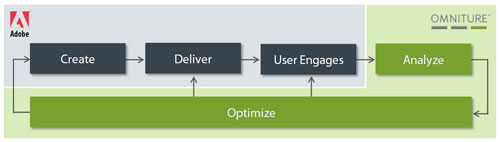
Adobe + Omniture + WPP = game changer

Twitter was on fire!

A short post to share my thoughts. I won't go into a long rambling about it.

Some deep thinking and speculation from all horizons. For the most part, people didn't see it coming... why did Adobe purchase Omniture? To make Flash tagging easier?

That’s not the point.

This picture clearly says what it's all about:
Adobe + Omniture means they will be looking at the whole value-chain process of developing website content and applications. This is far beyond making it easy to tag Flash!

Also, don't forget the huge strategic agreement with WPP. Add up Adobe + OMTR + WPP and you’ve got a major player who can change and steer the industry.

Friday, August 21, 2009

WASP v1.26 released

WASP v1.26 is now approved at addons.mozilla.org and had been available from WebAnalyticsSolutionProfiler.com for a couple of days.

Another round of bug fixes and minor enhancements while I work on WASP v1.50 (or what could turn out to be WASP v2.0).

What's new

  • WASP for Analyst:

    • Breakdown of tags now shows an "(uncategorized)" branch for tools where help is available but specific tag usage is unknown (applies to Google Analytics, Omniture SiteCatalyst, WebTrends and AT Internet Xiti)
    • Fixed detection failing when some JavaScript variables were defined with a null value
  • New/updated tools:

Please take 2 minutes to submit a review at addons.mozilla.org and visit the UserVoice page to suggest improvements and cast your vote.

Get WASP v1.26 now!

Friday, June 19, 2009

A tale of Web Analytics near miss

Wikipedia defines a "near miss" as being an "unplanned event that did not result in injury, illness, or damage - but had the potential to do so". I was reading Jim Novo's latest post about Analyze, Not Justify, relating a conversation with a client that didn't became one... I wanted to do such as post for a while and I figured out "what the heck, I'll share one of my experience". Of course, in doing so I will try to "protect the innocent". So here goes.

The agency who wanted to be

I was contacted by a traditional marketing agency (call it "ABC") that also does websites and online campaigns. They wanted me to help out with one of their clients (let's call them "XYZ"). Since I offer to "coach and empower web agencies" this sounded like a perfect opportunity. Furthermore, I had been referred by one of my very best client.

The agency wanted me to jump right in: fix that darn web analytics tool; make magic happen. At the same time, they were talking about very ambitious web initiatives for XYZ and how they would measure all of it. I smelled "risk ahead" and I was able to convince them to start with a Web Analytics Maturity Assessment which you can view bellow (click for larger view):


The outcomes from the assessment were pretty clear, both from an agency and a client perspective... Also, the goal was to go from virutally nothing and jump more than 1 level in the Maturity scale, which is also an important risk.

SixSigma DMAIC to the rescue

Knowing the risks is already a pretty good start. To alleviate those risks I addressed the project from a SixSigma problem resolution perspective (which I always do anyway). Starting with a Definition of clear objectives, then Measuring the actual state of the union (then doing Analysis, Improvement and Control). We went on to define and clarify business objectives, identify the stakeholders and the required metrics, identify which info would need to be communicated in dashboards and how often, etc.

The wall

Measuring the actual state is where we found the "politiwall" - the political brick wall. XYZ is the canadian branch of a much larger organization; a typical multi-national, multi-product global corporation. They are obviously accountable for success in Canada and as such, they maintain the site content and define the marketing strategy. However, figure this scenario:
  • CMS tool is under the responsibility of head office, but content and accountability for success is XYZ responsibility
  • XYZ tools are developed by local partners, one of those partners being the ABC agency. Accountability for success of those process-driven tools is also under XYZ responsibility
  • Head office standardized on Omniture and did a fantastic implementation. They obviously want to offer a global perspective on all XYZ websites. This is a perfectly valid approach.
As I noticed in a previous post, multi-national head offices tend to use "best of breed" tools and "impose" a level of standardization. On the other end, local branches of those larger organizations tend to use Google Analytics more, for a number of reasons: locally perceived control, costs, and maturity.

In the actual context:
  • XYZ is not allowed to add Google Analytics to the CMS framework
  • XYZ is not allowed to add Omniture tags to locally developed applications
  • Yet, we want to have a complete view of the user's interaction with the whole XYZ ecosystem (i.e. all components of the online presence, including the CMS, tools and promotional sites)
We are clearly facing a governance and ownership issue here. So tell me, what would you do?

My recommendations

Considering XYZ accountability for success, here are the next steps I'm envisioning:
  1. Demonstrate the direct and logical correlation between "accountability for success", "means to measure" and "power to take action". Escalate at the appropriate level (beyond current local director level).
  2. Since the headoffice have an implementation and best practice document, it could be reviewed to accomodate for more flexibility for local sites (something I've seen with another client who standardized the core implementation but allow for a level of flexibility on over 200 websites)
  3. Make sure to follow the implementation guidelines and best practice in implementing locally developed tools, with collaboration of the head office to make sure they are comfortable with the implementation
Point #1 is critical. If you don't solve it now it will always come back to haunt you!

Help me help you

Latest status was "the business case was presented to head office" and I'm waiting for feedback. At one point I had the impression the agency was putting the blame on me for failing to deliver. I had not insisted on starting with the right approach they would certainly be right (in fact, I'm refusing to work with a client if we don't start with a Maturity Assement). As an independent consultant, my role is to tell things as they are and guide you in the right direction. But you are ultimately driving and taking the decision to follow my recommendations or not.

I think this would make a great case for the "Creating and Managing the Web Analytics Culture" course I'm tutoring!

Any thoughts and feedback welcome!

Wednesday, May 27, 2009

Forrester web analytics forecast: WASP data

Forrester just released the "US Web Analytics Forecast, 2008 to 2014". John Lovett, Forrester analyst, predicts the US web analytics market will reach $1B by 2014, with a steady and amazing growth of 17% per year!

Collaborating with Forrester

I had the chance to collaborate with John Lovett & Forrester by providing WASP market data:
Data from the Web Analytics Solution Profiler (WASP), a service that detects analytics solutions installed on Web sites, projects that market penetration for Web analytics is roughly 58%. WASP also estimates that 78% of total market share is currently held by free vendor solutions. Further, among sites that have installations of fee-based Web analytics tools, 37% also have free tracking products installed, thereby duplicating their measurement efforts.
Data referenced in the Forrester document was based on a sample of 210,820 sites analyzed over a one-month time period between February 2009 and March 2009.

I you are a vendor seeking market share information or competitive data, an agency looking for business development opportunities or a market analyst, contact me to tap into the unique and valuable WASP market data.

My take

I got my hands on an advanced copy of the research and my feeling was simply "wow!" I can already hear people complaining "yeah, right... I knew that", the difference here is the level of detail, the trust and confidence you can put in this 10 pages document. The abstract says "the promise of web analytics needs an adjustment" and goes on to detail the specific points justifying such a statement.
  • "The future success of web analytics is dependent upon experts who translate raw data into insight". If only a fraction of professional services are delivered by vendors, the market for experienced consultants will continue to be in high demand.
  • "Data becomes the addictive drug because it can demonstrate success, predict outcomes, and establish business cases for new endeavors.". Web analytics is not a matter of ROI, it's a matter of accountability.
  • "The importance of integration is accentuated": during initial client meetings there is always a point of integrating everything... they quickly hit a roadblock because their web analytics maturity is simply not there.
  • "Optimization technology will be the next frontier": I would rather say "automation & optimization". We should always aim to automate tasks and transfer our knowledge into intelligent systems that will free us to work on the next challenges.
Being an independent consultant, I particularly like the statement that "professional services will be delivered from non-vendors providers".

Tuesday, April 21, 2009

MindMeld: from Omniture Summit to eMetrics San Jose

The first ever MindMeld was an invitation-only event held at the Omniture Summit 2009. I had the chance to be invited by Matt Langie, Senior Director of Product Marketing for Omniture. Under the coordination of John Lovett (Forrester Research) and Jim Sterne (WAA and eMetrics), we formed into roundtable groups to discuss hot topics of the day.
MindMeld is an interactive discussion forum of industry peers designed to foster review, debate, and offer proposed resolutions to issues inhibiting industry growth.

Social Media impact & measurement

I was pleased to be a session leader for social measurement. With representatives from iTunes, Warner Music, Norwegian Cruise Line, Best Buy and Brian Watkins (aka @omniture on Twitter), the session was broken down into three main blocks of about an hour each:
  • scoping and establishing the breath of discussion,
  • identify critical events, technologies and necessary actions
  • report key takeaways, resolutions and call to action (from an individual perspective, for Omniture and the industry as a whole)
The video of our takeaways is now available on the YouTube channel WAMindmeld. Mine is shown bellow:


MindMeld at eMetrics: the conversation continues

I'm glad to be part of it again, but now, as Jim puts it "that was only the beginning. Now, it's time to take action." The topic will be "What needs to happen to move the industry forward?", nothing less. In my new duties as one of the member of the Web Analytics Association Board of Directors, I guess this will be on my mind pretty much all the time!

Talking about eMetrics, I will be speaking twice, first about the web analytics maturity model I have developed and put the test (also check this post), and a second time on a panel about "The Softer Side of Metrics - Is it Hot in Here or is it Just Me?" with my friends Peterson and Jonathan Levitt. Jonathan will talk about 4Q and I will cover WASP.

Tuesday, April 14, 2009

Job: Web Analytics Specialist for online gaming

Another job in the Montreal region: Morris Mohawk Gaming Group offers online gaming services to users in North America.

They are looking for a Web Analytics Specialist. The ideal candidate will be someone smart, enthusiastic, and technical, with a passion for data and the know-how to drive web optimization success. The candidate will be equally comfortable drawing business conclusions and presenting to key stakeholders, as they are analyzing web data and dealing with IT partners.

To give you a hint of the type of job: "We have 42” TVs on every wall playing sports and poker non-stop. The traditional “dark and gloomy office” has no place at Morris Mohawk Gaming Group." :)

Thursday, April 2, 2009

Web Analytics in the automotive industry

David Iwanow, from Australian based The Lost Agency, have done an analysis of the use of web analytics in the automotive industry. He reviewed 21 automotive manufacturers and found that nearly all of them are using web analytics on their corporate sites. A figure ahead of most other verticals. Omniture is clearly leading that space (73% of the sites), followed by Google Analytics (13% of the sites). About 30% of them are "double dipping" (using more than one web analytics solution), most of the time Google Analytics. This number is consistent with other analysis I've done myself. Get the complete web analytics automotive industry report.

Headquarters vs localized sites

The study from The Lost Agency is interesting, and what I have also uncovered is the huge difference between the headquarter, official website and localized sites. For example, when I looked more closely at Canadian sites in the automotive space, I realized a number of them are using Google Analytics even if SiteCatalyst is being used on the corporate site.

Sites using Omniture SiteCatalyst:
  • Acura.com
  • AudiUSA.com, AudiCanada.ca
  • BMWusa.com
  • Fiat.com
  • Ford.com
  • GM.com, GM.ca
  • Honda.com
  • HyundaiUSA.com
  • Infinityusa.com
  • Kia.com
  • Mazda.com
  • NissanUSA.com
  • Subaru.com
  • Toyota.com
  • VW.com, VW.ca
Sites using Google Analytics:
  • Chrysler.com, Chrysler.ca
  • HyundaiCanada.com
  • Infinity.ca
  • Kia.ca
  • Mazda.ca
  • Nissan.ca
  • Porsche.com
  • Subaru.ca
  • VW.ca
Sites using WebTrends:
  • BMW.com, BMWusa.com, BMW.ca
  • Chrysler.ca, Chrysler.com
  • Ford.com, Ford.ca
  • Mazda.ca
  • Suzuki.com
  • Toyota.ca
Other tools:
No tools or log-only solution:
  • Acura.ca
  • Honda.ca
  • Lexus.ca

A matter of cost, maturity & control

Cost: I've been to a number of eMetrics conferences in the US, either as a speaker or attendee. What strikes me between the US and Canadian markets is the significant difference in investment in web analytics. Having worked with a number of Canadian companies, I have witnessed first hand how hard it is to justify the cost of high-end web analytics solutions. After all, a small US site is likely to receive more traffic than a large Canadian one! Different scales, and thus, the TCO are also very different when put against traffic and online revenues. If we think of multivariate testing, behavioral targeting and even voice of customer, Canadian sites are also generally less advanced than their US friends.

Control: The last element pertains to the justifiable and natural goal of uniformity across the brand, which often leads to a less flexible framework. The counterpart of that is the natural human tendency to try to solve problems and get information with the least amount of effort and political constraints, leading to "behind the door" implementation of non-officially approved tools, again, most of the time Google Analytics.

This point goes well beyond web analytics. I have seen a number of global organizations aiming to uniformly address the online channel while teams working on localized sites were striving to bypass those frameworks in order to gain flexibility and deliver on what they are accountable

Maturity: The other consequence, or reason (we're in a catch 22 here) is the web analytics maturity level is generally lower in Canada. Lower maturity leads to fewer investment in web analytics and ancillary applications, which makes the free Google Analytics much more interesting.

The Web Analytics Maturity Model was the topic of my eMetrics Toronto presentation. I will present a longer version of it at eMetrics San Jose, coming up in early May.

If you are on the Canadian side, do you perceive those differences? Do you agree about my view of cost/control/maturity? If you are working in a global corporation with localized sites, what's the best model to balance control and cost efficiency vs flexibility and empowering the localized teams?

Wednesday, February 18, 2009

WASP v1.10: Enhanced for SiteCatalyst

WASP v1.10 is awaiting approval on addons.mozilla.org but is already available from WebAnalyticsSolutionProfiler.com.

The focus of this release was on two things:
  • Do a round of bug fixes on crawler related issues
  • The Omniture Summit is the perfect occasion to bring some pretty cool SiteCatalyt tagging diagnostic features.

Advanced SiteCatalyst tags auditing with WASP

Noticeable WASP features for easier Omniture SiteCatalyst and Test&Target tags audits:
  • Detailed "human friendly" breakdown of tags in the sidebar.
  • Quick help for each tag value
  • Datatype validation of tags to make sure the data isn't corrupted
  • Data length validation of tags to make sure their values are not truncated
  • Hihglighted Test&Target mboxes
In the example snapshot (click for larger view), taken off the Omniture.com website, we can easily spot that s_account length might be too long. In this case, the documentation states s_account should be no more than 40 characters. However, this is a soft limit. In the case of pageName, for example, the 100 limit is a hard one and if the pageName is longer it will get truncated (a frequent issue!).

Other enhancements

  • Fixed crawler not starting or hanging
  • Tab focus will now automatically be on the latest web analytics tool WASP can find
  • WebTrends Live & SDC sidebar tags breakdown
  • Round of minor bug fixes
  • Tweaking to some tools detection
Get WASP v1.10 update now!

Omniture Summit day 1: MindMeld

On Tuesday afternoon was held the first ever MindMeld, a gathering of top industry analysts, consultants and important Omniture clients. The MindMeld ideas derives from the eMetrics Industry Insight and XChange idea of doing small groups discussion on various topics. Josh James, CEO of Omniture, introduced the activity to a select group of about 40 people, followed by intros from Matt Langie (Senior Director of Marketing), Jim Sterne (WAA & eMetrics) and John Lovett (Forrester).

Six small teams tackled topics ranging from social media, video and mobile, and raising analytics to the executive level.

I was pleased to be a session leader for social measurement. With representatives from iTunes, Warner Music, Norwegian Cruise Line, Best Buy and Brian Watkins (aka @omniture on Twitter), the session was broken down into three main blocks of about an hour each:
  • scoping and establishing the breath of discussion,
  • identify critical events, technologies and necessary actions
  • report key takeaways, resolutions and call to action (from an individual perspective, for Omniture and the industry as a whole)

Everyone gathered back to present their respective team outcomes. The outputs from this activity are being collected by Matt and will become available to everyone in the coming days or weeks. The goal is to continue the conversation, do statuses and bring new topics at other upcoming conferences such as eMetrics and XChange.

The day concluded with the opening reception at the Salt Palace convention center. The huge conference floor looked a bit emptier than the hugely crowded Grand Palace rooms of last year. But still, attendance was not too bad but obviously impacted by the economy.

Today is kicking off with Josh James keynote, stay tuned for more updates...

Monday, February 16, 2009

I'm heading to the Omniture Summit: here's why

While I’m waiting at O’Hare for my connecting flight to the Omniture Summit I’m thinking of all those who hoped to attend but won’t. It’s clear the current economic situation is pretty bad, budgets are tight and some conferences are even canceled. Even if expensive, maybe even more when you are a one person business like me, I see it as an investment and I’m confident it will turn out positively in the long run.

What can we expect this year? I doubt there will be as much people as last year, but how worse? If anything, those who will be there will be really serious about web analytics!

Should you go?

It’s always debatable whether these conferences are worth it or not as demonstrated by this thread on the Yahoo! Web Analytics Forum. Some will argue the sessions are too superficial, that most of them are disguised sells pitches, or the same info can be found on the Web or in the numerous press releases carefully scheduled to go live during the event.

Here's why I'm going

I don’t see it this way. As a web analytics professional consultant I strive to reach and stay at the top of the wave. In my consulting practice I even go as far as coaching web agencies (my future competitors) so they can develop their own internal web analytics practice. I’m one of the few people in hundred of miles around who is attending. The conference comes with a price tag, but leadership, top expertise and a strong professional network are priceless. This, to me, is where the value of the Omniture Summit is!

Not like being there... but better than nothing

While I'm at the conference I will try to post regularly on my blog and you can follow me on Twitter.

I will also organize another Web Analytics Wednesday so I can share some of what I'll learn.

Last minute scoop!

I had been invited to the invitation-only pre-conference event called MindMeld where leading professionals will gather to discuss today's challenges and the future of web analytics. I got a call a few minutes ago from Matt Langie (Senior Director of Product Marketing) to be one of the discussion leader for the event. Omniture executives, top clients and renowned experts will be attending. Some of those I know will be there: Jim Sterne (eMetrics & WAA), John Lovett (Forrester), Garry Angel (Semphonic), Bill Gassman (Gartner).

Thursday, January 29, 2009

Sapient seeking consultant for Toronto

We might be in a recession, but jobs in our field are still available. This time I'm relaying a job from a contact I have at Sapient. They have 2-3 positions for contracting jobs of up to 6 months at their client location.

Who is Sapient?

Sapient is both an interactive agency and a consulting firm working with a number of prestigious clients: Coca-Cola, Times Online, Food.com, etc. They have thousand of employees and 24 offices around the world.

The opportunity

Sapient is seeking Web Analytics specialists for definition and preparation of regular interval reporting, ad hoc requests and business & marketing insight through analysis. They are seeking  candidates with experience monitoring Web site performance and marketing campaign activity. Candidates should have a firm grasp of marketing strategy, performance analysis and implementation of analytics tools. Candidates should be familiar with MS Excel, MS PPT and ideally Omniture SiteCatalyst or HitBox . Experience with online surveys, A/B and/or multivariate testing a plus!

This contract will require the Analyst to commute daily to the client site in South Western Ontario. Travel expenses will be reimbursed.

If you are interested, email me at shamel(at)immeria(dot)net and I will put you in contact.

Wednesday, January 28, 2009

WASP v1.08 released

WASP v1.08 is now available through the official Mozilla extensions site at addons.mozilla.org

This version fixes an annoying bug that was introduced in v1.07... In order to get approval on the Mozilla site I had to tighten the security around the core detection module. In doing so I broke the detection for some tools...

As always, you can get the latest version from WebAnalyticsSolutionProfiler.com or in Firefox, simply do Tools/Addons and click on the "Find Updates" button.

Interesting posts about WASP on immeria

The very first post about WASP was on September 12th 2006: Web Analytics Solution Profiler - WASP!

Tag auditing, using WASP for Analyst and WASP Pro sidebar and crawler:
Market research:
Other articles where WASP was mentionned:

Rants and praises

I'm receiving tons of feedback about WASP. Some of it comes through email, bloggers and well known analysts reference it, vendors includes WASP in their training and use it as a support and implementation tool. Here are a couple of interesting posts that are related or talking about WASP:

I also want to reiterrate my invitation to use User Voice to suggest and vote for new features!

Monday, January 26, 2009

Switching Web Analytics solution: a case study

While doing quality assurance of a migration from WebSideStory HBX to Omniture SiteCatalyst we noticed some variations in the atomic metrics (or what the Web Analytics Association calls "building blocks"): page views, visits and visitors. While expected, I think it is important to understand why there are such discrepancies between various web analytics tools.

In this case study I'm demonstrating HBX and SiteCatalyst, but similar differences could be noticed with any tools. As you will see, generally the trends are identical, but the scales are different. Let's take an example from our daily life. Oven and meat thermometers both measure temperatures; a good cook will be able to use both to make a great dinner; but don't expect both thermometers to show the same result or you're calling for disaster!

In this article, I will focus only on page views, visits and visitors since almost all other reports are derived from those base metrics. I will consider the following points:
  • Hypothesis behind this analysis
  • The Page View metric
  • The Visits metric
  • The Visitors and Unique Visitors metrics
  • Factors that can influence those metrics

Methodology

The same site was tagged with both solutions, received a significant volume of traffic, and we collected data for over a month. The site only had a couple of different templates so we could easily make sure all pages were tagged and working correctly. WASP was used to audit the site and make sure the data being collected could be trusted. The exclusion filters and other configurations were double-checked to make sure they were similar.

There are few documented examples of companies switching from a product to another. Most observations are either anecdotal, the two products were not used in parallel or the web analytics switch coincided with a site redesign. For the same tools, some people have reported similar results while others have seen very different ones. The word of caution here is: "results may vary". Depending on the nature of your site and the type of traffic you get, which tools you are switching from and to, the impact will likely be very different.

Page Views

Page Views are the atomic elements of web analytics (now, along with events). As such, page view is the metric that should be the reported consistently by various web analytics vendors.

Both HBX and SiteCatalyst defines a page view as (ref. Omniture KB article #7824) "a request for a full-page document containing tracking code on a website. Each time the page is loaded, an image request is generated. Refresh, back and forward button traffic as well as pages loaded from cache will be counted as a page view." The WAA definition is rather short, stating simply it's "the number of times a page was viewed."

Looking at the graph (click for larger view), we see the discrepancy between the two solutions is acceptable, at an average of 2.2% (control limits between 1.5% and 3%, shown on the 2nd vertical axis). In this case, HBX is reporting slightly higher numbers than SiteCatalyst.

Visits

In both products, "a visit begins when a visitor first views a tracked page on a website. The visit will continue until there have been no additional tracking requests from the site for 30 minutes (default) or until the maximum visit length occurs (12 hours)."

If a visitor stays on one page for more than 30 minutes without additional tracking requests being sent and then resumes viewing additional pages, causing additional tracking requests to be sent, both products will register a new visit.

Both products require persistent cookies to count a visit. If a browser does not accept persistent cookies, both products will not calculate a visit for that visitor (but will track the page view).

This is compliant with the WAA standard definition of a visit: "A visit is an interaction, by an individual, with a web site consisting of one or more requests for a page. If an individual has not taken another action (typically additional page views) on the site within a specified time period, the visit will terminate by timing out."

The results for visits shows more variations, at 12.6% (control limits between 11.4% and 13.8%). That is, SiteCatalyst reports more visits than HBX does.

Visitors and Daily Unique Visitors

Since this metric is highly influenced by Visits, the discrepancy is also high, at 10.5% (limits between 9.1% and 11.9%). But here, HBX and SiteCatalyst handle the identification of unique visitors very differently. Although they both use persistent cookies, SiteCatalyst can fall-back to IP+User Agent to track unique visitors. The impact is significant:
  • HBX will still record page views for visitors rejecting cookies, "but will not be counted as a Visitor or Visit and will not generate visit-level data." (KB #7824)
  • SiteCatalyst, however, will still count visitors rejecting cookies as a Visitor (via fall-back) and will generate page-level data, but will not be counted as a Visit or generate visit-level data.
This explains why the discrepancy in Visitors might be lower than the one for Visits.

Factors to consider

Why such differences? Here is a list of various factors to consider:

1st party vs. 3rd party cookies
We can't insist enough on the importance of using 1st party cookies. In our case, HBX was historically tagged using 3rd party cookies (served from hitbox.com), while SiteCatalyst was tagged using 1st party cookies (served from their own domain). 3rd party cookies are much more likely to be blocked and deleted, some estimates states up 40%, even up to 50% of 3rd party cookies are either blocked or deleted on a monthly basis.

Tag code location
Some internal studies conducted by Omniture revealed that, for the same tool, putting the tagging code at the top vs. bottom of the page could lead to 3% to 8% differences in page views being collected. Depending on the site, visitors quickly sifting through page navigation might click on a link before the page is fully loaded, thus, before the tags are fired.

In our example, the SiteCatalyst code was implemented near the top of the BODY tag, while the HBX code was just before the closing BODY tag. Good practice generally recommends putting tags at the end of the page to alleviate any negative impact on the page loading time. However, there are cases where you will consciously decide to put it at the top.

Session timeout
SiteCatalyst uses a 30 minute default timeout period before considering a visit complete.

In SiteCatalyst, upon request, this time period can be customized by report suite. However, both the WAA and the IAB recommends a 30 minutes session timeout.

Visit reporting time period
Suppose I’m in the GMT-5 timezone (Quebec city, Eastern Time), and your company is somewhere in GMT-6 (Central Time), and Omniture is at GMT-6 (Utah, Mountain Time)... If my visit starts at 11:55pm (local time) and go on for 10 minutes after midnight, in which day should my traffic be recorded?

The Omniture KB article  #7824 states for both solutions that "a visit is reported only during the time period in which the visit is initiated". Furthermore, article #633 indicates that unique visitors are based strictly on the time zone specified in your report suite. Thus, if the reporting time is Mountain Time, and my visit starts at 11:55pm (EST) and last until 12:05am the next day, it would show up as being 10:55 pm when viewed from a Central Time perspective. Information regarding HBX wasn't available. However, taken globally, this would certainly not explain a difference of over 12%.

Conclusion

In this case, we know the atomic metric (Page Views) is accurate. We now have a fair explanation for the reported number of Visits & Visitors: different calculation methods, 1st party vs. 3rd party and code location plays a important role in the accuracy of your metrics. Even though the variance in Visits is a bit high, they still move in concert with one another. As David Kirschner, Principal Best Practices Consultant at Omniture, rightly pointed out "the causes for these discrepancies may be difficult to explain, but they should not prevent you from taking action on the data".

As a web analyst, and in such situations, your role is to explain in non-technical terms why there are differences in metrics. Always stress the significance of trends and if you can, run the two solutions in parallel and show the difference in scales. Use the thermometer analogy, or this one: CAD vs USD: both reports monetary amounts, they both use the same metric terminology (Dollars), but their values are different. For most people, trying to understand the intricacies of such a difference is not necessary in order to make good business decisions.

Please contact me if you need professional auditing of your web analytics implementation.

Acknowledgments: I want to thanks Penny Tietjen from Quickbooks Support at Intuit, as well as David Kirschner, Paul Kraus, Martin Liljenback, Alex Hill and James Kemp from Omniture for their great support.

Friday, January 23, 2009

Job: Senior Web Analytics Specialist at Mediagrif

I'm relaying a job offer I received from Mediagrif, a leading operator of e-business networks and provider of complete e-business solutions located in Montréal.

I have rarely seen such a thorough and complete description for a web analytics role, tip of the hat to Mediagrif for having a very clear description for this great job!

Position overview

The successful candidate will be responsible for driving the web analytics strategy of Mediagrif’s B2B websites, managing business analysis, reporting, and forecasting, and playing a key role in the business planning process. They will integrate data from different sources, track online performance as it relates to the total multi-channel business and develop insights with particular emphasis on understanding the effectiveness of user flows, new features, marketing programs and business intelligence. Their analysis will facilitate data driven decisions, highlighting strengths and weaknesses of the business units, presenting concise conclusions and proposing test paths for improvements. The candidate will be passionate about web analytics and remain updated on the latest web developments and best practices.

Responsibilities

General
  • Optimize implementation of Omniture web analytics toolset and utilize to analyze traffic and behavioral segments on our sites.
  • Develop and maintain consistent reporting framework; create holistic dashboards pulling data from different data sources.
  • Work with business owners to develop benchmark criteria for measuring online metrics; create and manage KPIs; provide analytical support, especially in the product definition phase; present cross-functional analysis.
  • Work with IT department, marketing, product management and business partners on data flow requirements and monitoring; perform audits and verify process integrity throughout campaign cycles.
  • Identify how effective various programs and Web site flows are performing, solicit and/or recommend improvements that target conversion rates and user satisfaction, implement and manage the testing of improvements and effectively communicate findings.
  • Deliver web analytics presentations in a variety of forums to employees at all levels of the company including to senior management team.
  • Assist the online and emarketing team by providing web analytics and insights to make data driven decisions; analyze web analytics information and provide recommendations in the context of campaigns, web site redesigns and new product development
  • Proactively seek to improve day-to-day efficiency and automate activities wherever possible.
Client management:
  • Possess understanding of clients’ market dynamics and act as a consultant to clients for the planning and execution of their online marketing needs
  • Provide recommendations on how to improve ROI of online marketing campaigns and product development
Project management:
  • Identify, create, prioritize, delegate tasks
  • Monitor project/task progress and escalate project related issues to appropriate teams (client, integration team, design team, etc.)

Education

BA or BS in Statistics, Business, Economics, Math or Computer Science (Masters preferred)

Experience

Minimum of three years hands on experience analyzing Web data for a medium to large ecommerce Web site or group of Web sites (5 years preferred)

Skills & competencies

Personal skills
  • Ability to speak and write fluently in French and English
  • Is goal and results oriented
  • Strong leadership, organizational, statistical, analytical and problem-solving skills
  • Self-motivated with excellent interpersonal and written communication skills
  • Ability to establish, nurture, and support good working relationships with internal and external clients
  • Client focused, creating an environment in which concern for client satisfaction is a key priority
  • Highly adaptable to change with the ability to identify, evaluate, and mitigate risk
  • Has strong initiative and is a creative thinker
  • Able to make complex decisions and solve problems involving varied levels of complexity, ambiguity and risk
  • Ability to cope with stressful situations
  • Curious nature is an asset
  • Highly effective working in teams with tight deadlines.
  • Ability to manage multiple projects simultaneously
Technical skills
  • Designing, constructing, and running reports using various online web-analytics solution
  • Constructing reporting dashboards in Excel with external queries.
  • Assisting in various web analytics projects, using data-mining techniques.
  • Mid-level expertise in the SEM (Search Engine Marketing) / PPC (Pay Per Click) and SEO (Search Engine Optimization) strategies and a minimum one year experience measure success of SEM/PPC and SEO campaigns / efforts.
  • Mastery of Excel, Powerpoint and other software tools for reporting and presenting data.
  • Thorough understanding of Web technologies such as HTML, CSS, XML
  • Expert at Access, SQL Server, Oracle, a plus.
  • Demonstrated ability to collect data, analyze trends, find stories, draw conclusions and act on recommendations.
  • Experience with web analytics program e.g. Coremetrics, WebTrends, Visual Sciences, Unica, Google Analytics)
  • Experience with statistical programs such as SAS and SPSS, and with statistical testing solutions such as Offermatica and Optimost.
  • Experience tracking solutions for technologies such as Flash, AJAX , video, etc.
  • Experience writing and de-bugging sophisticated JavaScript tags is desirable

If you want confidential/anonymous info about this job or Mediagrif, feel free to contact me privately, or get in touch with Human Ressources at Mediagrif directly.

If you are en employer seeking talent, or you are looking for a job, I'll be glad to relay the information.